ASUS 3008-81 Pike Pci Sas Raid Card Controller
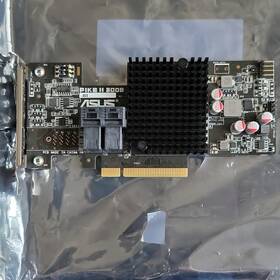
( Brand: Asus ), ( Manufacturer Part Number: 3008-81 ), ( Part Type: Disk Card Controller ), ( Network Ports: Sas ), ( Compatible Port: Pci Express ), ( Product Line: Pike Ii )
Review ASUS Pike Pci Express Sas Raid Card Disk Controller Series
The **ASUS 3008-81 Pike PCIe RAID Controller Card** is a high-performance, enterprise-grade storage solution designed to elevate the capabilities of servers, workstations, and high-end NAS systems requiring robust data management and redundancy. Built around the **LSI SAS2008 chipset**, this single-width, low-profile PCI Express (PCIe) x8 card delivers exceptional scalability and reliability, making it an ideal choice for environments where data integrity and throughput are paramount. With its **eight internal SATA/SAS ports**, the 3008-81 supports a wide range of storage configurations, including RAID 0, 1, 5, 6, 10, and 50, ensuring flexibility for both performance-driven and fault-tolerant setups. The card s **dual-channel SAS connectivity** allows for seamless integration with high-capacity SAS/SATA drives, SSDs, or hybrid storage arrays, while its **low-profile design** ensures compatibility with a broad spectrum of server chassis without requiring additional space. Engineered for enterprise reliability, the 3008-81 features **LSI s proven RAID technology**, which includes advanced error correction, data striping, and redundancy protocols to minimize downtime and safeguard critical data. Whether deployed in a small business server, a high-performance workstation, or a scalable NAS system, this controller excels in delivering consistent performance, efficient data handling, and peace of mind through its robust RAID management capabilities. Additionally, its **ASUS branding** brings a touch of quality assurance, with features like **firmware updates** for ongoing compatibility with evolving storage technologies, ensuring long-term usability in dynamic IT infrastructures.
The ASUS PIKE PCIe SAS RAID Controller (model 3008-81) is a mid-range SAS RAID card designed for enterprise storage solutions, particularly in small to medium-sized businesses or data centers. Below is a detailed breakdown of its pros and cons, followed by a conclusion and recommendation.
---
### **Pros of the ASUS PIKE 3008-81**
1. **RAID Support and Flexibility**
The card supports RAID 0, 1, 5, 6, 10, and 50, which provides robust data redundancy and performance optimization options. RAID 6 and 10 are particularly useful for protecting against disk failures while maintaining high throughput.
2. **High Port Count**
With eight internal SAS ports, the card can connect to a wide range of storage devices, including HDDs, SSDs, and JBODs. This makes it suitable for expanding storage arrays without needing multiple controllers.
3. **PCIe 3.0 x8 Interface**
The card utilizes a PCIe 3.0 x8 slot, which offers sufficient bandwidth for most enterprise workloads. While not the latest PCIe 4.0 or 5.0, PCIe 3.0 is still capable of handling high data throughput for RAID configurations.
4. **Battery Backup Module (BBM) Support**
The card supports optional battery backup modules (such as ASUS s own BBM-3008), which help maintain data integrity during power failures by keeping cache in case of a crash. This is critical for ensuring data consistency in RAID arrays.
5. **ASUS s Reputation for Reliability**
ASUS is a well-known brand in both consumer and enterprise hardware, and its RAID controllers are generally reliable. The PIKE series has a track record of stability, though it is not as high-end as some competitors like LSI or Dell HBA cards.
6. **Cost-Effective for Mid-Range Needs**
Compared to high-end enterprise RAID controllers (e.g., Dell PERC, HPE Smart Array), the ASUS PIKE 3008-81 offers a more budget-friendly solution without sacrificing too much performance or features. It is ideal for users who need RAID functionality without the premium price of branded enterprise solutions.
7. **Software Compatibility**
The card is compatible with most major operating systems, including Windows Server, Linux (via IT Mode or native drivers), and VMware ESXi. This makes it versatile for different server environments.
8. **Hot-Swap Support**
The card supports hot-swap drives, allowing for maintenance or upgrades without shutting down the system. This is a standard feature in enterprise-grade RAID controllers but is still valuable for reducing downtime.
9. **Low Profile and Compact Design**
The card is designed in a low-profile form factor, making it suitable for servers with limited space. This is particularly useful in rack-mounted systems where space is constrained.
10. **ASUS s Customer Support and Warranty**
ASUS provides customer support and warranties for its enterprise products, which can be beneficial for troubleshooting or replacements if issues arise. However, support may not be as extensive as that offered by dedicated enterprise vendors like Dell or HPE.
---
### **Cons of the ASUS PIKE 3008-81**
1. **Limited Performance Compared to High-End Controllers**
While the card is capable, it does not match the performance of high-end RAID controllers from brands like LSI (MegaRAID), Dell PERC, or HPE Smart Array. These controllers often include more advanced features like NVMe support, higher RAID levels, or better cache management. The ASUS PIKE is more of a mid-range solution.
2. **No NVMe Support**
The card does not support NVMe drives, which are becoming increasingly common in modern storage solutions. If your use case involves NVMe SSDs, you would need a separate controller or HBA to manage them.
3. **Driver and Firmware Dependence**
The performance and reliability of the card can be heavily dependent on the latest drivers and firmware updates. Outdated drivers may lead to compatibility issues or reduced performance. ASUS may not provide as frequent updates as enterprise vendors.
4. **Lack of Advanced Enterprise Features**
High-end RAID controllers often include features like:- **CacheCade** (for caching frequently accessed data)
- **Dual-port configurations** (for redundancy)
- **Advanced power management**
- **Integrated BBM with larger capacities**
The ASUS PIKE lacks some of these advanced features, which may be critical for large-scale or mission-critical environments.
5. **Compatibility with Some Operating Systems**
While the card works with most major OSes, some Linux distributions or older versions may require additional configuration or driver installation. This can be a minor inconvenience compared to plug-and-play solutions offered by enterprise vendors.
6. **No Dedicated Management Software**
The ASUS PIKE does not come with proprietary management software like Dell OpenManage or HPE Smart Storage Administrator. Users must rely on third-party tools or the card s basic web interface for monitoring, which may be less intuitive or feature-rich.
7. **Potential for Driver Conflicts**
In some cases, drivers for the ASUS PIKE may conflict with other hardware or software in the system. This is more common with less standardized hardware and can lead to instability or performance issues.
8. **Limited Expansion Options**
The card is primarily designed for SAS/SATA drives. If you need to expand into other storage protocols (e.g., Fibre Channel, iSCSI, or SAS expanders), you would need additional hardware, which adds complexity and cost.
9. **No Official Support for Very High-End Workloads**
While the card is suitable for mid-range workloads, it may not be ideal for extremely high-performance or high-availability environments (e.g., large-scale databases, virtualization clusters with thousands of VMs, or high-frequency trading systems). For such use cases, dedicated enterprise-grade controllers are recommended.
10. **Resale or Upgrade Limitations**
The ASUS PIKE is not as widely used in enterprise environments as some other brands, which could make it harder to find replacement parts or support if the card fails. Additionally, if you later need to upgrade your storage infrastructure, the ASUS PIKE may not integrate as seamlessly as more standardized solutions.
---
### **Conclusion**
The ASUS PIKE 3008-81 is a solid mid-range SAS RAID controller that offers a good balance of performance, reliability, and cost for small to medium-sized businesses or data centers. It excels in providing RAID redundancy, flexibility in drive configurations, and compatibility with a wide range of operating systems. The card is particularly well-suited for users who need a cost-effective solution without the complexity or expense of high-end enterprise controllers.
However, it is not without limitations. The lack of NVMe support, advanced enterprise features, and proprietary management software means it may not be the best choice for high-performance or mission-critical environments. Additionally, users who rely heavily on ASUS s long-term support or driver updates may find that the brand s focus is more on consumer and gaming hardware than enterprise storage solutions.
For most users who require a reliable, affordable RAID controller for general-purpose storage expansion, the ASUS PIKE 3008-81 is a practical choice. However, if your workload demands higher performance, advanced features, or greater scalability, investing in a high-end controller from Dell, HPE, or LSI would be more appropriate.
---
### **Recommendation**
- **Buy the ASUS PIKE 3008-81 if:**- You need a cost-effective RAID solution for a small to medium-sized server or storage array.
- Your primary use case involves SAS/SATA HDDs or SSDs without NVMe requirements.
- You prioritize RAID redundancy (especially RAID 6 or 10) and hot-swap capabilities.
- You are working within a budget that does not justify high-end enterprise controllers.
- You are comfortable managing drivers and firmware updates yourself.
- **Avoid the ASUS PIKE 3008-81 if:**- You require NVMe support or plan to use NVMe SSDs in your storage array.
- Your workload involves high-performance computing, large-scale virtualization, or mission-critical applications where reliability and advanced features are non-negotiable.
- You need proprietary management software or advanced cache management features.
- You are operating in an environment where long-term vendor support and driver updates are critical.
- You are willing to invest in a high-end controller (e.g., Dell PERC H740, LSI MegaRAID 9407-8i) for better performance, scalability, and enterprise-grade features.
For most home labs, small businesses, or non-critical server setups, the ASUS PIKE 3008-81 is a reasonable and cost-effective choice. For enterprise environments or high-demand applications, consider upgrading to a more robust solution.
Details:
ASUS PIKE II 3008-81 PCI Express SAS RAID Card Disk Controller Series.
specifications diskcontrolle:
- brand: Asus
- mpn: 3008-81
- part type: Disk Card Controller
- network ports: Sas
- compatible port: Pci Express
- product line: Pike Ii
offer diskcontrolle:
- quantity: 1
- availability: In Stock
- best offers: True
- started: March 26, 2026
- sold: 0
- options: Ship-to-home
payments diskcontrolle:
- other
- wallet: Google-pay
- credit card: Visa
seller diskcontrolle:
- city: San Jose, California
- # reviews: 322
- rating: 100.0%
returns diskcontrolle:
- policy: No Returns
shipping diskcontrolle:
- type: Calculated
- class: Standard
- service: USPS Ground Advantage
- transit: 5-11 Days
- cost: $5.52
- carrier: USPS
general diskcontrolle:
- Enterprise Networking, Servers > Server Components > Disk Controllers/RAID Cards
- condition: Used
Asus 3008-81 Is Similar To:
- Remote Asmb3-sol 2.0 Management Card Pci Asus Mini Ipmi (25.8% similar) Both ups and USPS us postal service requires phone number of recipient on the exporting documents. For shipping lead time, please refer to either ups or USPS web sites for detail information. If not, please let us know. So, I can be easier and faster to process the return item after I received it...(April 10th, 2015)
- Pci-sc200 Asus Scsi Controller Pci (40.8% similar) Flat rate standard shipping, for sale by original owner, an Asus pci SC200 SCSI controller. Included is what you see in the picture the adapter...(August 21st, 2016)
- Pike-2208 Asus 8-ports Raid Storage Controller Sas 6 Gbps 886227303854 (44.6% similar) Product condition factory refurbished to manufacturer condition, may show limited signs of use, with warranty. The customer must return the product to the USA ship to address listed on the order, and only then will save central provide a shipping return label for the return to save central. ...(July 29th, 2016)
- Re16r-r21b-pike Asus Pike Riser Card For Server System (42.3% similar) ...(March 12th, 2016)
- Fa.mt.430 Bestparts Asus Pike Controller Lsi Sas Ii Sata 615284548645 (31.9% similar) GPS raid card fa. GPS raid card features chirpiest: ls sas 2008 interface: Asus pike 8 ports 1/1 0 1e devices supported satay 6GBS data rate: iii and ii 6 GB per phys OS support windows server r2 SP2 2003 7 red hat enterprise Linux SUSE free BSD cent vampire package included: 1x controller PIKE ...(April 28th, 2018)
- Pike2008 Asus Pike Sas Sata Raid Card (45.3% similar) Shipped with USPS priority mail. Asus pike port sas satay 6GBS raid card condition is used but like new...(December 15th, 2018)
- Asus Hyper-m.2-x16-gen5-card Hyper M.2 X16 Gen5 Card Pcie 5.0 4.0 Supports Four Nvme 2242 2260 22 (21.7% similar) Asus hyper M.2 X16 GEN5 card pci 5.0/4.0 supports four Nome 2242/2260/2280/22110 devices up to 512 GPS for AMD and intel. Platform raid functions. Manufacturers change colors and item details frequently often do not update pictures. Atlanta network technologies, inc...(November 1st, 2023)
- Asus U3s6 Us36 Pci-e X4 Sata Iii Usb 3.0 Expansion Card (37.1% similar) Asus U3S6 USB and satay pci hub tested working...(August 9th, 2024)
- Asus 3108-8i 16pd Pike Ii 8port Sas 12gb s Pci-e 3.0 Controller Card (59.9% similar) Satay 6GB/S, this controller card is perfect for enterprise networking and servers. Introducing the Asus pike ii 3108-8I/16PD 8PORT sas 12GB/S pci-e 3.0 controller card. Its internal interfaces include sas and it belongs to the raid product line. This disk controller/raid card is a great addition to...(September 19th, 2024)
- Asus Pike-2108 Pike 2108 Controller Lsi Sas Raid Card Large Heat Sink (53.6% similar) Pulled from a working server...(October 5th, 2024)
- Asustek 3108-81 16pd Asus Pike Ii Pci-e 8-port Raid Controller Card No Cables (61.6% similar) Cosmetic condition a excellent, functional key functions working, data status nd non-data, r2 applicability c controlled. Condition: used...(December 19th, 2024)