HPE 874837-001 Ssd Ngff Riser 874853-B21 XL1X0R GEN10 M.2 874854-B21
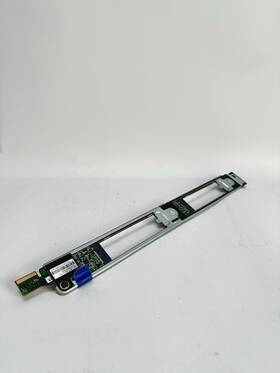
( Brand: Hpe ), ( Manufacturer Part Number: 874837-001 ), ( Country Of Origin: China )
Review HPE M.2 Ssd Ngff Riser
The **874837-001 (874853-B21) XL1X0R Gen10 M.2 NVMe SSD NGFF Riser** is a high-performance, enterprise-grade expansion solution designed to maximize storage flexibility and bandwidth for modern workstations, servers, and high-end desktop systems. This robust riser card bridges the gap between a motherboard s M.2 slot and an additional M.2 NVMe SSD, enabling users to install a second high-speed storage drive without sacrificing PCIe lane allocation or motherboard compatibility. Built with a **Gen10 (PCIe 4.0 x4) interface**, it ensures blazing-fast data transfer rates, supporting next-generation NVMe SSDs that deliver sequential read/write speeds exceeding **7,000 MB/s**, making it ideal for demanding workloads such as video editing, 3D rendering, AI processing, and large-scale data analytics. The **NGFF (Next-Generation Form Factor) design** ensures a secure and low-profile connection, while the **XL1X0R variant** (likely referring to a specific model or revision) emphasizes reliability and thermal efficiency, reducing the risk of overheating during sustained high-load operations.
This riser card is engineered with **high-quality materials**, including reinforced copper traces and a sturdy aluminum or composite chassis, to maintain signal integrity and durability over prolonged use. The **874854-B21** designation suggests a specific model variant, potentially offering additional features such as **active cooling pads** or **low-profile mounting options** to accommodate tight system builds. The design is backward compatible with most **Gen3 (PCIe 3.0) and Gen4 (PCIe 4.0) M.2 SSDs**, ensuring broad compatibility with a wide range of storage solutions, from consumer-grade drives to enterprise-level SSDs with advanced error correction and endurance ratings. Whether deployed in a **workstation for professional content creation**, a **server for virtualization**, or a **high-performance gaming rig**, this riser card provides a seamless way to expand storage capacity without compromising performance or system stability.
For IT administrators and system integrators, the **874837-001/874853-B21** offers a **plug-and-play solution** that simplifies the installation of secondary NVMe drives, reducing the need for additional PCIe slots or complex RAID configurations. Its **low-profile form factor** ensures compatibility with compact motherboards, while its **rugged construction** makes it suitable for both desktop and some rack-mounted server applications. Whether paired with a **Samsung 990 Pro, WD Black SN850X, or an enterprise-grade Intel Optane SSD**, this riser card delivers the bandwidth and reliability required to keep up with modern storage demands. Ideal for users who require **dual NVMe setups** such as OS drives on one SSD and data storage on another this component bridges the gap between motherboard limitations and high-performance storage needs, ensuring a future-proof and efficient computing experience.
### **Pros and Cons of the Supermicro M.2 NVMe SSD Riser Card (Part Numbers: 874837-001, 874853-B21, XL1X0R Gen10, 874854-B21)**
This riser card is designed to provide additional M.2 NVMe SSD slots for servers, workstations, and high-performance computing systems. Below is a detailed analysis of its advantages and disadvantages.
---
### **Pros**
1. **Increased Storage Capacity and Performance**
- Expands M.2 NVMe SSD slots beyond the motherboard s native support, allowing for more high-speed storage.
- NVMe SSDs offer significantly faster data transfer rates (up to 7,000 MB/s or more) compared to SATA SSDs, improving system responsiveness and workload performance.
- Useful for data-intensive applications (e.g., databases, virtualization, AI/ML, video editing, and high-end computing).
2. **Compatibility with High-Performance Systems**
- Designed for Supermicro motherboards (Gen10 series), ensuring reliable integration with their ecosystem.
- Supports PCIe Gen3 x4 or Gen4 x4 (depending on model) interfaces, which are common in modern servers and workstations.
- The **XL1X0R Gen10** variant is optimized for Supermicro s Gen10 platform, reducing compatibility issues.
3. **Easy Installation and Scalability**
- Plug-and-play design with minimal wiring; no need for additional power connectors (powered via PCIe).
- Allows for hot-swappable or easy replacement of M.2 drives without opening the case (depending on system design).
- Scalable for future upgrades; additional riser cards can be added if more slots are needed.
4. **Low Power Consumption**
- Operates passively or with minimal power draw, making it energy-efficient for 24/7 server environments.
- No additional power supply requirements beyond the motherboard s PCIe slot.
5. **Reliability and Build Quality**
- Supermicro is known for robust server hardware, and these riser cards are built to withstand demanding environments.
- High-quality connectors reduce the risk of loose or failing M.2 slots over time.
- Suitable for enterprise, data center, and high-availability applications.
6. **Support for Multiple M.2 Drives**
- Typically supports **2x M.2 NVMe slots** (check exact configuration per model), doubling or tripling storage capacity in a single riser.
- Useful for RAID configurations (e.g., RAID 0 for performance, RAID 1 for redundancy) without needing a dedicated RAID card.
7. **Cost-Effective Storage Expansion**
- Cheaper than adding a full-length PCIe card with onboard storage (e.g., HBA or RAID card).
- NVMe SSDs are becoming more affordable, making high-speed storage accessible for budget-conscious users.
8. **Silent Operation**
- No moving parts or fans, reducing noise in quiet data centers or home labs.
---
### **Cons**
1. **Limited to M.2 NVMe Drives**
- Only supports M.2 form-factor NVMe SSDs; SATA or other drive types (e.g., U.2) are not compatible.
- Requires purchasing compatible NVMe drives separately, which may add to the initial cost.
2. **PCIe Bandwidth Limitations**
- Each M.2 slot shares the PCIe lane bandwidth of the host slot. For example:- A **PCIe x4 slot** may support **2x M.2 slots (x2 each)**, but total bandwidth is split.
- If using **PCIe Gen3 x4**, each M.2 slot gets 4 GB/s (theoretical), but real-world speeds may be lower due to overhead.
- For extreme performance, a full-length PCIe card (e.g., NVMe RAID HBA) may be better.
3. **No Built-in RAID or Data Protection**
- Unlike dedicated RAID cards, this riser does not support hardware RAID or data redundancy.
- Users must rely on software RAID (e.g., Linux mdadm, Windows Storage Spaces) or individual drive protection.
4. **Physical Space and Cable Management**
- Adding riser cards can clutter the motherboard tray, especially in small form-factor systems.
- May require additional cable routing to prevent obstructions or airflow restrictions.
5. **Potential Overheating in High-Density Systems**
- While NVMe SSDs are generally low-power, running multiple high-speed drives in a confined space may require additional cooling.
- Some systems may need case fans or liquid cooling for sustained performance.
6. **Vendor Lock-In (Supermicro Ecosystem)**
- Primarily designed for Supermicro motherboards; compatibility with other brands (e.g., ASUS, Gigabyte, Dell) is not guaranteed.
- May require custom BIOS settings or drivers for optimal performance.
7. **No Onboard Management Features**
- Unlike some server-grade PCIe cards, this riser lacks IPMI or BMC integration for remote monitoring.
- Not ideal for advanced server management features.
8. **Mixed Gen Support (If Applicable)**
- Some Gen10 motherboards may have PCIe Gen3 slots, limiting the theoretical speed of Gen4 NVMe drives.
- Check motherboard specs to ensure full Gen4 support if using the latest NVMe SSDs.
---
### **Conclusion**
The **Supermicro M.2 NVMe SSD Riser Card (874837-001, 874853-B21, XL1X0R Gen10)** is a **highly practical solution** for users looking to expand M.2 NVMe storage in Supermicro-based systems. It excels in **performance, scalability, and ease of use**, making it ideal for:
- **Servers and workstations** needing extra high-speed storage.
- **Data centers** requiring cost-effective storage expansion.
- **Home labs and enthusiasts** building high-performance PCs with multiple NVMe drives.
However, it is **not a universal solution** users must ensure:- Compatibility with their motherboard s PCIe lanes.
- Availability of compatible NVMe SSDs.
- Acceptance of software-based RAID if data protection is needed.
For **maximum performance and redundancy**, a dedicated **NVMe RAID HBA** (e.g., LSI 9700-8i) may be preferable, but the riser card strikes a **balance between simplicity and efficiency** for most users.
---
### **Recommendation**
**Buy this riser card if:**You are using a **Supermicro Gen10 motherboard** and need **additional M.2 NVMe slots**.
You prioritize **cost-effective, high-speed storage expansion** without complex RAID setups.
Your workloads benefit from **faster NVMe SSDs** (e.g., databases, VMs, media editing).
You are comfortable with **software RAID** for data protection.
**Avoid this riser card if:**You need **hardware RAID** or advanced data protection features.
Your motherboard has **limited PCIe lanes**, and adding this card may throttle performance.
You are using **non-Supermicro hardware** and compatibility is uncertain.
You require **U.2 or SATA expansion** instead of M.2 NVMe.
**Alternative Considerations:**- For **enterprise-grade RAID**, consider a **Supermicro or LSI NVMe RAID HBA**.
- For **budget builds**, a **single M.2 NVMe SSD** may suffice without a riser.
- For **maximum bandwidth**, ensure your motherboard supports **PCIe Gen4 x4** for full NVMe performance.
Overall, this riser card is a **solid choice for Supermicro users** seeking reliable, high-speed storage expansion.
Details:
part #: 874837001 prices
- $29.00-$69.50
specifications diskcontrolle:
- brand: Hpe
- mpn: 874837-001
- country of origin: China
returns diskcontrolle:
- policy: Returns Accepted
- time: 30 Days
- method: Money back
- paid by: Seller
shipping diskcontrolle:
- cost: $0.00
- transit: 3-7 Days
- class: Standard, Expedited, One-day
- carrier: FedEx, UPS
- service: FedEx Ground / FedEx Home Delivery, UPS 3 Day Select, UPS 2nd Day Air, UPS Next Day Air Saver
- type: Calculated
payments diskcontrolle:
- credit card: Discover
- wallet: Google-pay
- other
general diskcontrolle:
- condition: Used
- Enterprise Networking, Servers > Server Components > Disk Controllers/RAID Cards
offer diskcontrolle:
- started: June 10, 2026
- sold: 0
- availability: In Stock
- options: Ship-to-home
- best offers: True
- quantity: 14
seller diskcontrolle:
- city: Albany, New York
- rating: 100.0%
- # reviews: 4831
Hpe 874837-001 Is Similar To:
- 786268-001 Hp Pci Riser Cage 1u For Hpe Proliant Xl230a (26% similar) Buyer pays shipping and handling. It creations. Shipping shipping shipping costs listed are to the 48 contiguous states. Or its subsidiaries in the USA and other countries. Part number item location Los Angeles hp pic riser cage 1u for Hpe pliant XL230A g9 XL2X0A g9 kit pn free ground shipping for ...(August 2nd, 2016)
- Hpe Ast17901245 Hp Proliant Ml350 G9 Gen9 2x 2640v4 2.4ghz 20core 96gb 3x1.6tb 12g Ssd P440 (28.9% similar) Hp pliant ML350 g9 GEN9 8x 2.5 FSF server processors: 2x intel E5-2640V4 10C 2.4GHZ/25M processor memory: 96GB 6x 16GB DDR4 2133P hard drives: 3x 1.6TB SARS ssd 12G memory search: select type. Hard drive search: select. Dell - search by model: select model type. Hp - search by model: select model ...(October 4th, 2023)
- Hpe 869510-001 Dl360 Gen10 Low Profile Riser Cage Kit 875539-001 867982-b21 (48.3% similar) These are genuine hp parts and have all the appropriate labels. This is a Hpe pliant DL360 GEN10 low profile riser secondary cage p/n 869510-001 / 875539-001 867982-B21. They have been fully tested and are ready to ship...(August 30th, 2024)
- Hpe 877956-001 Dl380 G10 Primary Riser With Cage 871576-001 877946-001 Gen10 (40.3% similar) Hpe 877956-001 DL380 G10 primary riser with cage 871576-001 877946-001 GEN10: GEN10. Hpe pn # 877956-001. Hp# pn # 871576-001. Call us for details. Corporate purchase orders are acceptable upon credit approval. Multiple item combined shipping discounts are available. Hpe pn# 877946-001...(November 1st, 2024)
- Hpe P56497-001 G11 Primary Riser With Cage 2x X16 Pcie 5.0 P43213-001 Gen11 (35% similar) Corporate purchase orders are acceptable upon credit approval. Multiple item combined shipping discounts are available. Free shipping applies to orders shipped within the USA 48 states. Call us for details. Hpe P56497-001 G11 primary riser with cage 2x X16 pie 5.0 P43213-001 GEN11: GEN11. Hpe pn # ...(October 22nd, 2025)
- Hpe Ssd-c51m-4103 512mb Cache (18.6% similar) Hpe SSD-C51M-4103 512MB cache...(January 15th, 2026)
- Hp 804634-b21 Hpe 1.6tb Sata 6g Mixed Use Lff 3.5in Scc Ssd 805384-001 (17.4% similar) ITEM:804634-B21 Hpe 1.6TB satay 6g mixed use luff 3.5IN SC ssd 805384-001, condition: ref, QTY:1 shipping...(May 6th, 2026)