SUPERMICRO AOC-MH25G-B2S2GM Dual Network Adapter Card Aoc 25GBE SFP28 V5119
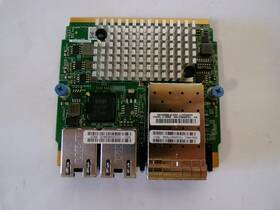
( Brand: Supermicro ), ( Manufacturer Part Number: AOC-MH25G-B2S2GM ), ( Part Type: Network Adapter Card )
Review SUPERMICRO Aoc Mh25g B2s2gm Dual Network Adapter Card V5119
The **Supermicro AOC-MH25G-B2S2GM** is a high-performance, dual-port 25 Gigabit Ethernet (25GbE) network adapter card designed for enterprise-grade servers and data center environments where bandwidth, reliability, and low latency are critical. Built on the latest **Intel Ethernet 25GbE X722 family** controller technology, this adapter delivers blazing-fast data transfer speeds of up to **50 Gbps combined** (25 Gbps per port) while maintaining exceptional efficiency and scalability. Ideal for modern workloads such as high-performance computing (HPC), virtualization, cloud computing, storage area networks (SAN), and AI/ML applications, the AOC-MH25G-B2S2GM ensures seamless connectivity with minimal packet loss and optimized throughput.
Featuring **dual SFP28 optical ports**, this adapter supports a wide range of high-speed fiber optic transceivers, including **QSFP28 breakout modules** (for 100GbE compatibility) and standard **SFP28 modules** (for 25GbE connections), making it highly versatile for diverse network architectures. The card is engineered with **low-power consumption** and **high energy efficiency**, ensuring it operates reliably even in power-sensitive environments. Its **PCIe 3.0 x8 interface** provides ample bandwidth for sustained high-speed data transfers, while the **Intel I210 family s advanced features** such as **VMDq (Virtual Machine Device Queues), iWARP, and RDMA (Remote Direct Memory Access)** enhance performance in virtualized and distributed computing environments.
Designed with **enterprise-grade reliability**, the AOC-MH25G-B2S2GM incorporates **hardware-based checksum offload, TCP/IP acceleration, and advanced error correction**, reducing CPU overhead and improving overall system stability. The card supports **Linux, Windows Server, and VMware ESXi**, making it a seamless fit for mixed environments. Its compact **half-height, low-profile (B2S2GM) form factor** ensures compatibility with a wide range of Supermicro and third-party server platforms, while its **fanless or fan-assisted cooling options** (depending on the model variant) allow for flexible deployment in space-constrained or high-density server racks.
Perfect for next-generation networking demands, the **AOC-MH25G-B2S2GM** is a robust solution for organizations transitioning to **25GbE infrastructure**, whether for enhanced storage connectivity, high-speed inter-server communication, or next-gen data center fabrics. With its **future-proof design**, support for advanced networking protocols, and **Supermicro s reputation for quality and performance**, this adapter card is an essential component for modern IT infrastructures seeking maximum speed, efficiency, and scalability.
The Supermicro AOC-MH25G-B2S2GM is a high-performance dual-port 25Gbps SFP28 network adapter card designed for enterprise and data center environments. Below is a detailed breakdown of its pros and cons, followed by a conclusion and recommendation.
---
### **Pros**
1. **High Throughput and Performance**
The card supports dual 25Gbps ports, delivering aggregate bandwidth of 50Gbps. This is ideal for high-speed data transfer, virtualization, storage networks (such as NVMe-oF or iSCSI), and high-performance computing (HPC) workloads. The 25Gbps speed is significantly faster than traditional 10Gbps or 1Gbps interfaces, reducing latency and improving overall network efficiency.
2. **SFP28 Compatibility**
The card uses SFP28 transceivers, which are widely supported in modern data centers. This flexibility allows for various connectivity options, including direct attachment copper (DAC) cables, optical fiber (e.g., QSFP28 breakout), or passive copper cables. The SFP28 form factor is also backward-compatible with some 10Gbps SFP transceivers in certain configurations, though performance will be limited to 10Gbps.
3. **Low Latency and High Reliability**
Supermicro s hardware is known for its robustness and low-latency performance, which is critical for applications like financial trading, real-time analytics, or low-latency networking. The card is designed for enterprise-grade reliability, reducing the risk of packet loss or network bottlenecks.
4. **Support for Advanced Networking Features**
The card supports features such as:- **RDMA (Remote Direct Memory Access):** Accelerates data transfer between servers without CPU intervention, improving performance in virtualized or containerized environments.
- **VMDq (Virtual Machine Device Queues):** Enhances network virtualization by allowing multiple virtual machines to share the physical adapter efficiently.
- **SR-IOV (Single Root I/O Virtualization):** Enables multiple virtual functions (VFs) on a single physical function (PF), improving resource allocation in virtualized environments.
These features are particularly useful for cloud computing, virtual desktop infrastructure (VDI), and database workloads.
5. **Compatibility with Supermicro Servers**
The card is designed specifically for Supermicro motherboards, ensuring seamless integration with their server platforms. This includes support for Supermicro s BIOS and management tools, such as IPMI (Intelligent Platform Management Interface), which simplifies monitoring and troubleshooting.
6. **Energy Efficiency**
Supermicro s hardware is generally optimized for power efficiency, which can reduce operational costs in large-scale deployments. The card s low power consumption (typically around 10-15W per port) helps maintain overall server efficiency.
7. **Future-Proofing**
With 25Gbps becoming a standard in modern data centers, investing in this card ensures compatibility with upcoming networking technologies. It can also serve as an upgrade path from 10Gbps infrastructure, reducing the need for immediate hardware replacements.
8. **Vendor Support and Warranty**
Supermicro offers robust customer support, including technical documentation, firmware updates, and warranty coverage. This is particularly valuable for mission-critical environments where downtime is costly.
---
### **Cons**
1. **Higher Cost Compared to Lower-Speed Alternatives**
The AOC-MH25G-B2S2GM is more expensive than traditional 10Gbps or 1Gbps network adapters. The cost includes not only the card itself but also the SFP28 transceivers, which can add to the total expenditure. For smaller deployments or budget-conscious environments, this may be a significant drawback.
2. **Requires Compatible Infrastructure**
To fully utilize the card s 25Gbps capabilities, the rest of the network infrastructure such as switches, cables, and servers must also support 25Gbps. If the network is still reliant on 10Gbps or 1Gbps components, the card s performance will be bottlenecked. This may require additional capital expenditure to upgrade the entire network stack.
3. **Limited Availability of SFP28 Transceivers**
While SFP28 transceivers are becoming more common, they are not as widely available or standardized as SFP or SFP transceivers. This can lead to compatibility issues with certain vendors or longer lead times for procurement. Additionally, some transceivers may not support the full 25Gbps speed, especially passive copper options.
4. **Complexity in Configuration**
The advanced features of the card (e.g., RDMA, SR-IOV, VMDq) require careful configuration, particularly in virtualized environments. Misconfiguration can lead to performance degradation or network instability. This may necessitate additional training for IT staff or reliance on specialized support.
5. **Power and Slot Considerations**
The card occupies a PCIe x8 slot, which may be a limiting factor in servers with constrained PCIe lane budgets. Additionally, while the power consumption is reasonable, servers with multiple high-speed network cards may require adequate power delivery to avoid instability.
6. **Potential for Driver and Firmware Issues**
While Supermicro provides updates, there is always a risk of driver or firmware incompatibilities, especially when integrating with non-Supermicro hardware or hypervisors (e.g., VMware, KVM, Hyper-V). Testing in a staging environment before full deployment is advisable.
7. **Overkill for Low-Demand Workloads**
For environments with modest networking requirements (e.g., small offices, non-critical applications, or legacy systems), the performance of a 25Gbps card may be unnecessary. In such cases, a lower-cost 10Gbps or even 1Gbps adapter would suffice, reducing unnecessary expenses.
---
### **Conclusion**
The Supermicro AOC-MH25G-B2S2GM is an excellent choice for high-performance, data-intensive environments where network speed, reliability, and advanced features are critical. It excels in scenarios such as:
- Data center virtualization (e.g., VMware, KVM, Hyper-V).
- High-performance computing (HPC) or AI/ML workloads.
- Storage networks (NVMe-oF, iSCSI, Fibre Channel over Ethernet).
- Financial trading, real-time analytics, or low-latency applications.
- Upgrades from 10Gbps infrastructure where future-proofing is a priority.
However, it is not ideal for budget-conscious deployments, small offices, or environments where the existing network infrastructure cannot support 25Gbps. The higher cost, transceiver dependencies, and configuration complexity must be weighed against the performance gains.
---
### **Recommendation**
**Buy the Supermicro AOC-MH25G-B2S2GM if:**1. Your network infrastructure (switches, cables, servers) is already or will be upgraded to support 25Gbps.
2. You are deploying in a data center, virtualized environment, or high-performance computing setup where network speed is a bottleneck.
3. You require features like RDMA, SR-IOV, or VMDq for optimized performance in virtualized or containerized workloads.
4. You are planning long-term scalability and want to avoid premature upgrades.
**Avoid the Supermicro AOC-MH25G-B2S2GM if:**1. Your budget is limited, and lower-speed adapters (e.g., 10Gbps) would meet your needs.
2. Your network switches or other components do not support 25Gbps, limiting the card s effectiveness.
3. You lack the expertise to configure advanced networking features or do not have support resources available.
4. Your workloads are not demanding enough to justify the higher cost and complexity.
**Alternatives to Consider:**- For lower-cost 25Gbps options, explore Intel or Mellanox adapters, though they may lack Supermicro s tight integration.
- If 25Gbps is overkill, a dual-port 10Gbps SFP adapter (e.g., Supermicro AOC-USA-2D4) could be a more cost-effective solution.
- For direct-attached storage or high-speed storage networks, consider NVMe-oF adapters with lower latency optimizations.
Ultimately, the AOC-MH25G-B2S2GM is a strong investment for the right use cases, but careful planning is required to ensure it aligns with your infrastructure and requirements.
Details:
Could have marker writing on unit. R2B SJ L2 V5119. Item is offered with a 30-day money back guarantee. No manuals, cords, cables, batteries, battery charger, external power supply, software, or instructions are included in this offering unless specifically listed above the.
May have stickers and tape residue. The item exteriors may have minor scratches, scuffs, dents, cracks, nicks, etc. Toggle navigation Menu. This item was pulled from a working machine and is guaranteed.
Supermicro AOC MH25G b2S2GM 25GbE Dual SFP28 Network Adapter Card V5119 Pulled Working, Item Is In Fairly Good Cosmetic Condition has minor signs of wear, You are buying for a V5119. This is completely out of our hands. Has clearly been used.
part #: aocmh25gb2s2gm prices
- $49.99-$269.00
specifications diskcontrolle:
- brand: Supermicro
- mpn: Aoc-mh25g-b2s2gm
- part type: Network Adapter Card
general diskcontrolle:
- Enterprise Networking, Servers > Server Components > Disk Controllers/RAID Cards
- condition: Used
seller diskcontrolle:
- rating: 99.7%
- city: Houston, Texas
- # reviews: 110203
payments diskcontrolle:
- credit card: Mastercard
- other
- wallet: Apple-pay
- cash
offer diskcontrolle:
- sold: 0
- availability: In Stock
- started: May 12, 2026
- options: Ship-to-home
shipping diskcontrolle:
- transit: 3-7 Days
- class: Standard
- cost: $0.00
- type: Fixed
- service: Standard
returns diskcontrolle:
- policy: Returns Accepted
- paid by: Seller
- time: 30 Days
- method: Money back
Supermicro AOC-MH25G-B2S2GM Is Similar To:
- Aoc-ibh-002 8f82848-10-14 Lot Megaraid Abm-800t Raid Backup Battery Card Lsiibbu07 Supermicro (11% similar) Customer should in advance to schedule for a pickup. However larger items and quantity orders take more time to pack. Boxes, APO, FPO and military bases...(December 8th, 2015)
- A0c-s2208l-h8ir Supermicro Lot Of Channel Raid Card 658759000682 (35.5% similar) Substitute part numbers:with it parts, there are often identical sub numbers available for that which merely designate factory the item was made at or perhaps production batch. Please investigate your local import requirements prior to purchase as there may be such fees at the time of or receipt. ...(August 24th, 2018)
- Aoc-cgp-i2 Supermicro New Gigabit Card Intel Ethernet Controller 672042110810 (30.3% similar) New Supermicro AOC-CGP-I2 2PORT gigabit card intel Ethernet controller I350 pic-express 3 auto-negotiation for speed, duplex, flow control - IEEE, 802. 1 retail these microloan adapters are the latest innovation from Supermicro, designed to fit easily inside densest systems. 5GTS or interface - dual...(October 18th, 2018)
- Aoc-lpzcr1 Supermicro Card Raid (26.9% similar) Supermicro add-on card AOC-LPZCR1 all-in-one zero-channel 64MB pic-x raid...(November 14th, 2018)
- Supermicro Pci Sas Raid channel Aoc-lpzcr2 Sata Card profile (38.4% similar) Please if you do not have a street address. Condition please view photos great condition with no damage. Please do call us if there are any questions or concerns at. If item value is expedited shipping available, call us for a quote. Please do call us if there are any questions or concerns at...(May 26th, 2015)
- Pc Battery Aoc-lpzcr3 Controller Card Adaptec Channel Raid Supermicro (12.7% similar) This listing is for a Supermicro aoc LPZCR3 raid controller card. This was pulled from a fully functional environment. There may be a 15 re stocking fee depending on the circumstances of the return...(March 27th, 2015)
- Aoc-s2308l-l8e Supermicro 8 Ports Sas (28.8% similar) Please if this is an issue. These time frames don't apply to bulk orders. Condition, or if we explicitly mention a different warranty for that item. Shipping handling orders for parts are shipped within 24 hours after purchase. Boxes or APO. Our shipping quotes on are only applicable to the ...(November 10th, 2017)
- Aoc-s2308l-l8i Supermicro Super Pcb Pcie Storage Controller Module Card (25.2% similar) 30-DAY DOA warranty this product carries. Please review images thoroughly before purchasing. Standard shipping prices are only good for the lower 48 states. All pictures are taken in house. Our contact: Rodney Wang SC asset management, inc. If you do receive the package, submit clear images of ...(September 17th, 2018)
- Aoc-s3008l-l8e Supermicro Port Sas Internal Host Bus Adapter (37.8% similar) Please see actual pictures. Theres no other parts, manuals, software included...(May 15th, 2018)
- Aoc-s3008l-l8i Supermicro Server Raid Controller (29.4% similar) ...(July 28th, 2018)
- Aoc-s3108l-h8ir-16dd Supermicro 12gb-s Eight-port Sas (29.8% similar) Shipping handling orders for parts are shipped within 24 hours after purchase. These time frames don't apply to bulk orders. Please if this is an issue. Servers workstations are handled with extreme care and foam packaging. Condition, or if we explicitly mention a different warranty for that item. ...(January 4th, 2018)