DELL H3Y5T Poweredge Bay Perc Dual Cable T630-T430-T330-8 H330 H730P
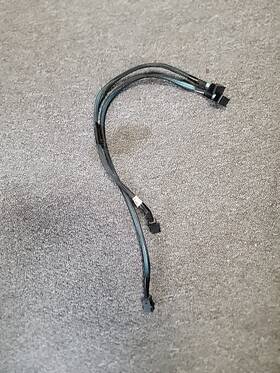
( Brand: Dell ), ( Manufacturer Part Number: H3Y5T ), ( Model: T630 T430 T330 8 ), ( Product Line: Poweredge ), ( Type: Server )
Review DELL Poweredge Bay Perc H730 Dual Hd Cable
The **Dell PowerEdge T-Series (T330, T430, T630) with PERC H3Y5T (H330, H730, H730P) and Dual Cable Management** represents a robust, enterprise-grade server solution engineered for high-performance computing, virtualization, and data-intensive workloads. Designed with Dell s signature reliability and scalability, these tower servers deliver a powerful blend of processing power, storage flexibility, and manageability, making them ideal for businesses requiring a balance of efficiency and future-proofing. The **T-Series chassis** features a compact yet spacious form factor, accommodating up to **two 3.5-inch or 2.5-inch drives** (depending on the model) in the **T330/T430** or **six 2.5-inch drives** in the **T630**, with optional **hot-plug** capabilities for uninterrupted operation during maintenance. The **dual cable management** system enhances airflow and cable organization, reducing thermal throttling and simplifying deployment in dense server racks.
At the heart of these servers lies the **PERC H3Y5T**, a high-performance **RAID controller** that supports either the **H330 (entry-level), H730 (mid-range), or H730P (premium)** variants, each offering distinct advantages. The **H330** provides cost-effective RAID 0, 1, 5, 6, and 10 configurations with **128MB cache**, ideal for budget-conscious deployments requiring basic redundancy. The **H730** elevates performance with **256MB cache** and support for **NVMe SSDs**, enabling faster data processing and higher throughput for virtualized environments and database workloads. The **H730P**, equipped with **512MB cache** and **Dual-Port 10GbE**, delivers enterprise-grade resilience with **RAID 60** and **RAID 600** support, ensuring data integrity in mission-critical applications. All PERC variants integrate seamlessly with **Dell s OpenManage** suite, offering remote monitoring, predictive failure alerts, and firmware updates via **iDRAC (Integrated Dell Remote Access Controller)**, which includes **Lifecycle Controller** for streamlined hardware management.
The **T-Series servers** are powered by **Intel Xeon Scalable processors (Skylake or Cascade Lake)**, delivering **multi-core performance** and **high memory bandwidth** to handle demanding workloads such as VMware ESXi, Microsoft Hyper-V, or SQL Server. With support for **up to 1.5TB of DDR4 ECC memory** (depending on the model), these servers ensure low-latency operations and data consistency, critical for high-frequency trading, AI/ML inference, or large-scale analytics. The **dual cable management** feature not only improves airflow but also reduces cable clutter, making these servers easier to deploy in **rack-mounted or tower configurations** without sacrificing performance. Additionally, the **T630** model stands out with its **expanded storage capacity**, making it a versatile choice for **NAS, SAN, or homogenous workloads** where scalability is paramount.
For organizations prioritizing **energy efficiency**, the **T-Series servers** incorporate **Dell s PowerEdge-branded components**, including **low-power processors, optimized cooling fans, and redundant power supplies (RPS)** in select configurations. The **H730P s dual-port 10GbE** further enhances network throughput, reducing latency in distributed environments, while the **iDRAC9** provides **virtual console access, secure shell (SSH) support, and RESTful APIs** for automated provisioning. Whether deployed as a **standalone server, part of a hyper-converged infrastructure (HCI), or in a hybrid cloud setup**, these PowerEdge models offer a **future-proof investment** with **Dell s ProSupport Plus** or **Enterprise Support** ensuring minimal downtime through proactive diagnostics and 24/7 technical assistance.
In summary, the **Dell PowerEdge T330/T430/T630 with PERC H3Y5T and dual cable management** represents a **highly configurable, enterprise-class server platform** designed for **scalability, reliability, and performance**. Whether optimizing for **cost efficiency (H330), balanced performance (H730), or maximum resilience (H730P)**, these servers provide the **flexibility to adapt to evolving business needs** while maintaining **Dell s reputation for durability and innovation**. From **SMBs expanding their IT infrastructure** to **large enterprises consolidating workloads**, this lineup delivers a **proven, all-in-one solution** for modern data centers.
### **Pros and Cons of Buying Dell PowerEdge Servers with PERC H330/H730/H730P (T330, T430, T630) with Dual Cable**
#### **Overview**
Dell s PowerEdge T330, T430, and T630 servers with PERC H330, H730, or H730P adapters are mid-range enterprise-grade systems designed for virtualization, database workloads, and small-to-medium business (SMB) or departmental use. These servers offer a balance of performance, reliability, and expandability, but they come with trade-offs depending on use case, budget, and future needs.
---
### **Pros**
#### **1. Performance and Scalability**
- **High I/O Performance:** The PERC H730/H730P (with dual-port NVMe support) and H330 provide faster data throughput compared to basic RAID controllers, making them suitable for virtualization (VMware, Hyper-V) and database workloads.
- **Dual-Port Connectivity:** The H730P (with dual-cable support) allows for redundant SAS/SATA connections, improving reliability in storage arrays and reducing single points of failure.
- **RAID Flexibility:** Supports RAID 0, 1, 5, 6, 10, and 50, allowing for performance tuning (RAID 0/10) or data protection (RAID 6).
- **NVMe Support (H730/H730P):** Enables faster storage with NVMe SSDs, critical for high-performance databases, VDI, or AI/ML workloads.
#### **2. Reliability and Enterprise-Grade Features**
- **Hot-Plug Capability:** All three server models support hot-swappable drives and power supplies, reducing downtime during maintenance.
- **Dual Processor Support:** The T630 supports up to two 18-core Xeon Scalable processors (up to 285W TDP), while the T430 supports up to two 16-core Xeon E5-2600 v4/v3 processors. This provides headroom for future upgrades.
- **Redundant Power and Cooling:** Options for redundant power supplies (RPS) and cooling (hot-swappable fans) improve uptime in critical environments.
- **Dell s ProSupport:** Access to Dell s enterprise-level support, including hardware replacement, firmware updates, and technical assistance, which is valuable for businesses relying on uptime.
#### **3. Expandability and Upgrade Path**
- **Multiple Drive Bays:**- **T330:** 8x 3.5" or 12x 2.5" hot-plug drives.
- **T430:** 12x 3.5" or 24x 2.5" hot-plug drives.
- **T630:** 16x 3.5" or 32x 2.5" hot-plug drives.
- This allows for large storage configurations, including JBOD, RAID, or hybrid setups.
- **PCIe Slots:**- **T330:** 2x PCIe 3.0 x8 (full-height).
- **T430:** 2x PCIe 3.0 x8 (full-height).
- **T630:** 4x PCIe 3.0 x16 (full-height) or 2x PCIe 3.0 x16 2x PCIe 3.0 x8 (mix).
- Enables the addition of NICs (10G/25G/40G), GPUs, or HBA cards for specialized workloads.
- **Memory Support:**- **T330/T430:** Up to 1.5TB DDR4 (24 DIMMs).
- **T630:** Up to 3TB DDR4 (48 DIMMs).
- Supports registered (RDIMM) and load-reduced (LRDIMM) memory, useful for memory-intensive applications.
#### **4. Virtualization and Workload Optimization**
- **Optimized for VMware/Hyper-V:** The PERC H730/H730P and T630 s high core counts make them ideal for virtualization, reducing vCPU overhead.
- **Dell s OpenManage Integration:** Tools like OpenManage Enterprise (OME) and PowerEdge System Manager (PEM) provide centralized management for virtualization stacks, monitoring, and automation.
- **Battery Backup (H730/H730P):** The H730P includes a battery backup unit (BBU) for cache protection, reducing data loss during power failures.
#### **5. Cost-Effectiveness for Mid-Range Needs**
- **Lower Cost Than High-End Servers:** Compared to Dell s PowerEdge R740/R750 or HPE ProLiant DL380, these servers offer a more budget-friendly option while still providing enterprise features.
- **Refurbished/Used Market:** These models are commonly available in the used/refurbished market at significant discounts, making them attractive for cost-conscious buyers.
- **Long-Term Availability:** Dell continues to support these models with firmware updates and parts, ensuring longevity.
#### **6. Dual-Cable PERC (H730P) Advantages**
- **Redundant Storage Connectivity:** The dual-cable H730P reduces the risk of storage array failures by providing an alternative path for data transfer.
- **Better for High-Availability Setups:** Ideal for environments where storage redundancy is critical (e.g., database servers, file servers).
- **Future-Proofing:** If expanding storage later, dual-cable support simplifies adding more drives or controllers.
---
### **Cons**
#### **1. Age and End-of-Life Considerations**
- **Older Chipset (T330/T430):** The T330 and T430 use the LGA 2011v3 (E5-2600 v3) and LGA 2011-3 (E5-2600 v4) sockets, respectively, which are nearing end-of-life for Intel Xeon processors. Newer workloads may benefit from newer CPUs (e.g., Xeon Scalable 2nd/3rd Gen).
- **T630 Still Relevant but Not Cutting-Edge:** The T630 uses the Xeon Scalable 1st Gen (Skylake) and is still supported, but newer servers (e.g., T650) offer better performance per watt and newer features like PCIe 4.0.
- **Limited PCIe 4.0 Support:** Only the T630 supports PCIe 4.0 (via some NICs/GPUs), but most storage and networking cards still use PCIe 3.0.
#### **2. Power and Thermal Constraints**
- **Power Consumption:**- **T330:** 150W 300W (with 2x E5-2600 v3).
- **T430:** 200W 400W (with 2x E5-2600 v4).
- **T630:** 250W 500W (with 2x Xeon Scalable 1st Gen).
- Higher-end workloads may require additional cooling or power supplies.
- **Cooling Requirements:** The T630, in particular, can generate significant heat, requiring proper airflow and cooling management in data centers.
#### **3. Limited NVMe Support (H330)**
- The **PERC H330** does not support NVMe drives, limiting performance for NVMe-optimized workloads (e.g., all-flash databases). The **H730/H730P** is required for NVMe acceleration.
#### **4. Upgrade Path Limitations**
- **No Direct CPU Upgrade Path:** Once installed, CPUs cannot be swapped for newer models without replacing the motherboard (except for some Xeon E5-2600 v3/v4 upgrades).
- **Memory Limits:** While memory capacity is high, DDR4 speeds are capped at 2400MT/s (T330/T430) or 2666MT/s (T630), which may not match newer workloads requiring higher speeds.
- **Storage Expansion:** Adding more drives may require additional enclosures or backplanes, increasing complexity.
#### **5. Software and Licensing Costs**
- **Virtualization Licenses:** Running VMware ESXi or Hyper-V requires licensing, which can add significant cost, especially for larger deployments.
- **Dell Support Costs:** While ProSupport is valuable, it comes at an additional cost, which may not be justified for small deployments.
- **OS Licensing:** Windows Server, Linux, or other OS licenses are required, adding to the total cost of ownership (TCO).
#### **6. Physical Size and Rack Space**
- **Rack Footprint:**- **T330/T430:** 1U (compact but limited expansion).
- **T630:** 2U (more space for drives and PCIe cards
Details:
This server model offers reliable performance and high-quality components for efficient data storage management. It belongs to the PowerEdge product line and is designed for enterprise networking server applications. Perfect for businesses looking a robust and salable server solution from trusted brand like Dell. The product is a Dell PowerEdge server with an 8 bay PERC H330 H730 H730P dual HD cable.
part #: h3y5t prices
- $9.99-$39.95
specifications diskcontrolle:
- brand: Dell
- mpn: H3y5t
- model: T630 T430 T330 8
- product line: Poweredge
- type: Server
general diskcontrolle:
- Enterprise Networking, Servers > Server Components > Disk Controllers/RAID Cards
- condition: Used
returns diskcontrolle:
- paid by: Seller
- method: Money back
- policy: Returns Accepted
- time: 30 Days
payments diskcontrolle:
- credit card: Visa
- wallet: Paypal
- other
shipping diskcontrolle:
- class: Standard, Expedited, One-day
- cost: $0.00
- carrier: USPS, FedEx
- transit: 4-10 Days
- service: USPS Ground Advantage, FedEx 2Day, FedEx Standard Overnight
- type: Calculated
offer diskcontrolle:
- sold: 0
- started: March 30, 2026
- quantity: 1
- availability: In Stock
- options: Ship-to-home
seller diskcontrolle:
- rating: 100.0%
- # reviews: 119
- city: Willard, Ohio
Dell H3Y5T Is Similar To:
- 0.012114348866074875 Dell Perc Sas Raid Controller Battery Cables (27% similar) I'll get back to you as soon I can. Condition: used, working if a power adapter is required for this item, it not included cord shows signs of normal use w some scuffs scratches blemishes sticker residue no other accessories hardware software...(October 13th, 2018)
- 0.11192593339700618 Dell Poweredge Sas Raid Controller Perc Card Battery Cable (39% similar) Condition: used, working if a power adapter is required for this item, it not included cord shows signs of normal use w some scuffs scratches blemishes sticker residue no other accessories hardware software. I'll get back to you as soon I can...(August 1st, 2018)
- 0.16846368637021225 Dell Poweredge Perc Sas Raid Controller Card Battery Cables (37.4% similar) I'll get back to you as soon I can. Condition: used, working if a power adapter is required for this item, it not included cord shows signs of normal use w some scuffs scratches blemishes sticker residue no other accessories hardware software...(June 27th, 2018)
- 0.17877322485337088 0.7132309102340029 Dell Perc H710p (21.5% similar) I'll get back to you as soon I can. Condition: used, working if a power adapter is required for this item, it not included cord shows signs of normal use w some scuffs scratches blemishes sticker residue no other accessories hardware software...(September 5th, 2017)
- 0.21310806238776236 Dell Perc Sas Raid Controller Battery Ram Qty (24.1% similar) Condition: used, working if a power adapter is required for this item, it not included cord shows signs of normal use w some scuffs scratches blemishes sticker residue no other accessories hardware software. I'll get back to you as soon I can...(March 10th, 2018)
- 0.235709166849966 0.2306969976098321 Dell Poweredge 2950 (24.2% similar) I'll get back to you as soon I can. Condition: used, working if a power adapter is required for this item, it not included cord shows signs of normal use w some scuffs scratches blemishes sticker residue no other accessories hardware software...(October 2nd, 2017)
- 0.2548422196094777 Dell Perc Sas Raid Controller Battery Cable (27.5% similar) Condition: used, working if a power adapter is required for this item, it not included cord shows signs of normal use w some scuffs scratches blemishes sticker residue no other accessories hardware software. I'll get back to you as soon I can...(April 26th, 2018)
- 0.31396718087771713 Dell Perc Sas Raid Controller Card For Poweredge Battery (27.6% similar) If a power adapter is required for this item, it not included cord shows signs of normal use w some scuffs scratches blemishes sticker residue no other accessories hardware software. Condition: used, working, comes as shown. I'll get back to you as soon I can...(August 17th, 2018)
- 0.33236011367493234 Dell Perc Sas Raid Controller Battery Connection Cable (25.3% similar) Condition: used, working if a power adapter is required for this item, it not included cord shows signs of normal use w some scuffs scratches blemishes sticker residue no other accessories hardware software. I'll get back to you as soon I can...(September 26th, 2018)
- 0.3371404716388322 Dell Sas Pcie Hba Dual Port Adapter Card (29.6% similar) Condition: used, working if a power adapter is required for this item, it not included cord shows signs of normal use w some scuffs scratches blemishes sticker residue no other accessories hardware software. I'll get back to you as soon I can...(May 8th, 2018)
- 0.346283308649288 Dell Perc Sas Raid Controller Battery Cable (27.7% similar) I'll get back to you as soon I can. Condition: used, working if a power adapter is required for this item, it not included cord shows signs of normal use w some scuffs scratches blemishes sticker residue no other accessories hardware software...(June 27th, 2018)