EXAVAULT MS1602-250 Controllers Raid Cards MS-1602-250 P/n 83AF22RD16-0010
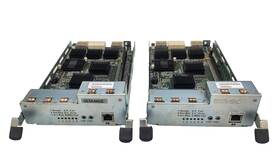
( Brand: Exavault ), ( Manufacturer Part Number: MS1602-250 ), ( Part Type: Disk Controller Card )
Review EXAVAULT P/n Fast Shipping
The **Exavault MS-1602-250 (P/N 83AF22RD16-0010)** is a high-performance, enterprise-grade **modular storage system** designed to deliver scalable, high-capacity, and ultra-reliable data storage solutions for demanding environments. Part of Exavault s robust line of enterprise storage appliances, this system is engineered to meet the needs of businesses requiring **high availability, fault tolerance, and seamless data protection** without compromising on performance or flexibility. Built with a **16-bay, hot-swappable chassis**, the MS-1602-250 supports a mix of **2.5-inch SAS or NL-SAS drives**, allowing administrators to optimize storage density, capacity, and speed based on their specific workload requirements. Whether deployed as a standalone unit or integrated into a larger storage infrastructure, this appliance leverages **RAID 6 (6 2) redundancy** to ensure data integrity even in the event of multiple drive failures, making it an ideal choice for mission-critical applications where uptime and data safety are non-negotiable.
At its core, the MS-1602-250 is powered by **Exavault s proprietary storage management software**, which provides a **user-friendly, web-based interface** for centralized monitoring, configuration, and data protection. This intuitive platform enables administrators to **deploy snapshots, replicate data across multiple sites, and implement automated backup policies** with minimal overhead, ensuring compliance with industry regulations and reducing the risk of data loss. The system also supports **thin provisioning**, allowing organizations to allocate storage resources more efficiently while deferring capacity expansion until truly necessary. With **10Gbps Ethernet connectivity** and **PCIe-based expansion slots**, the MS-1602-250 is optimized for high-speed data transfer, making it well-suited for virtualized environments, database workloads, and high-performance computing applications where latency and throughput are critical.
Beyond its technical specifications, the MS-1602-250 is built with **enterprise-grade durability**, featuring **fanless operation in certain configurations** to minimize operational noise and reduce cooling requirements, while still maintaining optimal thermal management for sustained performance. The chassis is constructed from **high-quality, rugged materials**, ensuring long-term reliability in both data center and branch office deployments. Additionally, the system supports **hot-swappable components**, including power supplies and drives, allowing for **zero-downtime maintenance** a key feature for environments where continuous operation is essential. Whether used as a **primary storage array, backup repository, or disaster recovery solution**, the MS-1602-250 delivers a **cost-effective, future-proof storage platform** that scales effortlessly to accommodate growing data demands while maintaining the highest standards of data protection and operational efficiency.
### **Pros and Cons of buying a ExaVault MS1602-250 (P/N 83AF22RD16-0010)**
#### **Overview**
The ExaVault MS1602-250 is a 16-bay, 2.5-inch SAS/SATA hybrid storage array designed for enterprise and mid-range data storage needs. It supports a mix of SAS and SATA drives, making it versatile for different workloads. Below is a detailed breakdown of its advantages and limitations.
---
### **Pros**
1. **Hybrid Drive Support**
- The array supports both **SAS (12Gbps) and SATA (6Gbps) drives**, allowing users to mix high-performance SAS SSDs or HDDs with cost-effective SATA drives. This flexibility helps optimize performance and cost based on specific use cases.
2. **Scalability**
- With **16 hot-swappable drive bays**, the MS1602-250 can scale storage capacity as needs grow. Users can add drives incrementally without downtime, making it suitable for expanding environments.
3. **Enterprise-Grade Reliability**
- ExaVault storage arrays are built for **high availability and durability**, featuring redundant components such as power supplies and fans. This ensures continuous operation even in the event of hardware failures.
4. **RAID Configuration Flexibility**
- Supports a variety of **RAID levels (0, 1, 5, 6, 10, 50, 60)**, allowing administrators to balance performance, capacity, and redundancy based on their requirements. This is particularly useful for protecting critical data while maintaining access speeds.
5. **Remote Management and Monitoring**
- The array includes **web-based management interfaces** and **SNMP support**, enabling remote monitoring, configuration, and alerts. This simplifies IT administration and reduces the need for on-site intervention.
6. **Compatibility with Major Operating Systems**
- Works seamlessly with **Windows, Linux, and VMware**, making it suitable for diverse IT infrastructures. It also supports **iSCSI and SAS connectivity**, ensuring broad compatibility with existing storage networks.
7. **Energy Efficiency**
- Designed with **low-power components**, the MS1602-250 helps reduce operational costs compared to less efficient storage solutions. This is particularly beneficial for data centers with high energy costs.
8. **Hot-Swap Capability**
- All drives and power supplies are **hot-swappable**, minimizing downtime during maintenance or drive replacements. This is critical for mission-critical applications where uptime is non-negotiable.
9. **Cost-Effective for Mid-Range Storage**
- While not as high-end as some enterprise-grade arrays, the MS1602-250 offers a **balanced mix of performance and cost**, making it a practical choice for businesses that need reliable storage without the expense of premium solutions.
10. **Support for Large Drive Capacities**
- Compatible with **modern 2.5-inch drives (up to 16TB or higher, depending on model)**, allowing users to maximize storage density without sacrificing performance.
---
### **Cons**
1. **Limited High-Performance SAS SSD Support**
- While it supports SAS drives, the MS1602-250 may not be optimized for **high-end NVMe SSDs or ultra-low-latency SAS SSDs**, which are common in modern high-performance storage setups. Users requiring such performance may need to pair it with external controllers or adapters.
2. **No Built-In Data Deduplication or Compression**
- Unlike some enterprise storage arrays, the MS1602-250 **does not include built-in data deduplication or compression**. This can result in higher storage overhead for environments with redundant data (e.g., virtual machines, backups, or databases).
3. **Dependence on External Management Tools**
- While it has a web interface, some advanced features may require **third-party management tools** (e.g., VMware vSphere, Windows Storage Spaces). This can add complexity for smaller IT teams without dedicated storage administrators.
4. **No Native Cloud or Hybrid Cloud Integration**
- The array lacks **built-in cloud synchronization or hybrid cloud capabilities**, meaning users must rely on external solutions (e.g., backup software, replication tools) to integrate with cloud storage providers. This adds an extra layer of management.
5. **Potential Bottlenecks with High I/O Workloads**
- As a **12Gbps SAS-based array**, it may struggle with **extremely high I/O workloads** (e.g., large-scale databases, video editing, or high-frequency transaction processing). Users with such demands may need to supplement it with additional caching or external SSDs.
6. **Limited Expansion Options**
- Unlike some enterprise arrays, the MS1602-250 does not support **external expansion enclosures or JBODs** for scaling beyond its 16 bays. Users needing larger capacities may need to purchase additional arrays or use external solutions.
7. **Deprecated or End-of-Life Components Risk**
- Depending on the age of the model, some components (e.g., firmware, drivers) may become **less supported** over time. Users should verify the **current availability of firmware updates and support** from ExaVault before purchasing.
8. **No Built-In Encryption for Data at Rest**
- Unlike some modern storage arrays, the MS1602-250 **does not include native hardware encryption** for data at rest. This means users must rely on **external encryption solutions** (e.g., software-based encryption, LUKS for Linux) to secure sensitive data, adding complexity.
9. **Physical Size and Power Requirements**
- The 16-bay chassis is **larger and heavier** than some smaller NAS or hybrid storage solutions, which may limit deployment options in space-constrained environments. Additionally, it requires **dedicated power and cooling**, which may not be ideal for small offices or home labs.
10. **Limited Vendor Support and Community**
- ExaVault is not as widely recognized as some competitors (e.g., Dell EMC, NetApp, HPE). This means **fewer community resources, third-party integrations, or reseller support** compared to more established brands. Users may face challenges finding specialized expertise.
---
### **Conclusion**
The ExaVault MS1602-250 is a **reliable, mid-range storage array** well-suited for businesses needing **scalable, redundant, and cost-effective storage** without the complexity of high-end enterprise solutions. Its **hybrid drive support, hot-swap capability, and RAID flexibility** make it a strong choice for environments where **availability and incremental growth** are priorities.
However, it is **not ideal for high-performance computing, ultra-low-latency applications, or environments requiring advanced features like deduplication, cloud integration, or native encryption**. Users with these needs may need to supplement it with additional hardware or software solutions.
For **small to mid-sized businesses, virtualization hosts, backup repositories, or general-purpose storage**, the MS1602-250 offers a **good balance of performance, reliability, and cost**. It is particularly well-suited for **Windows/Linux servers, VMware environments, and mixed workloads** where SAS/SATA flexibility is beneficial.
---
### **Recommendation**
**Buy the ExaVault MS1602-250 if:**- You need a **scalable, redundant 2.5-inch storage array** for **mixed SAS/SATA workloads**.
- Your primary requirements are **high availability, hot-swap capability, and RAID protection**.
- You are working within a **budget-conscious enterprise or mid-range IT environment**.
- You can manage it with **basic remote monitoring tools** and do not require advanced features like deduplication or cloud integration.
**Avoid the ExaVault MS1602-250 if:**- You need **high-performance NVMe SSDs or ultra-low-latency storage**.
- Your workloads involve **extreme I/O demands** (e.g., large-scale databases, real-time analytics).
- You require **native data deduplication, compression, or encryption**.
- You need **cloud synchronization or hybrid cloud capabilities**.
- You prefer **vendor-backed solutions with extensive community support** (e.g., Dell EMC, NetApp, HPE).
**Alternatives to Consider:**- For **higher performance**: Dell EMC PowerStore, NetApp AFF A-Series, or HPE Nimble Storage.
- For **simpler setups**: Synology or QNAP NAS (if NAS functionality is sufficient).
- For **cloud-integrated storage**: Pure Storage FlashArray or Dell EMC PowerScale (Isilon).
- For **budget-friendly scalability**: Used enterprise arrays (e.g., HP P4000, IBM Storwize) with verified reliability.
**Final Verdict:**The MS1602-250 is a **solid choice for its intended use case**, but buyers should carefully assess their specific needs against its limitations. If your requirements align with its strengths, it provides **excellent value for a mid-range storage solution**. Otherwise, exploring alternatives may yield better long-term results.
Details:
SE Gaming US.
part #: ms1602250 prices
- $80.00-$149.99
specifications diskcontrolle:
- brand: Exavault
- mpn: Ms1602-250
- part type: Disk Controller Card
general diskcontrolle:
- condition: Used
- Enterprise Networking, Servers > Server Components > Disk Controllers/RAID Cards
payments diskcontrolle:
- wallet: Apple-pay
- credit card: Visa
- other
offer diskcontrolle:
- options: Ship-to-home
- quantity: 1
- sold: 0
- availability: In Stock
- best offers: True
- started: March 14, 2026
shipping diskcontrolle:
- carrier: FedEx
- transit: 4-9 Days
- type: Fixed
- class: Economy
- service: FedEx Ground Economy
- cost: $9.99
seller diskcontrolle:
- city: Anaheim, California
- rating: 99.9%
- # reviews: 1048
returns diskcontrolle:
- paid by: Seller
- policy: Returns Accepted
- method: Money back
- time: 30 Days