HP Sr Sas Raid Controller P408I-A GEN10 12GB 804334-001 836260-001
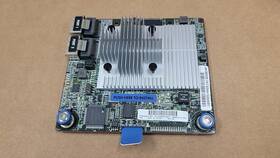
( Brand: Hp ), ( Manufacturer Part Number: P408IA ), ( Part Type: Controller ), ( Compatible Brand: For Hp ), ( Network Ports: Sas )
Review HP Sr 12gb Sas Raid Controller
The **HP P408i-a SR Gen10 12GB SAS RAID Controller (Part Numbers: 804334-001 and 836260-001)** is a high-performance, enterprise-grade storage solution designed to deliver uncompromising reliability, scalability, and efficiency for mission-critical workloads in modern data centers. Part of Hewlett Packard Enterprise s (HPE) ProLiant Gen10 server lineup, this internal RAID controller is engineered to optimize data protection, accelerate I/O performance, and streamline storage management for businesses demanding enterprise-level durability and flexibility. Built with a **12GB SAS interface**, the P408i-a SR leverages high-speed data transfer rates, ensuring seamless connectivity to SAS and SATA drives while supporting up to **eight internal drives** in a RAID configuration. This controller is specifically designed for **small-to-medium enterprise (SME) and mid-range server deployments**, offering a balance of cost-effectiveness and robust functionality without sacrificing the advanced features found in larger-scale storage solutions.
At its core, the P408i-a SR incorporates **Smart Storage Administrator (SSA) software**, a user-friendly yet powerful interface that simplifies RAID configuration, monitoring, and maintenance. The controller supports a comprehensive suite of RAID levels, including **RAID 0 (striped), RAID 1 (mirrored), RAID 5 (striped with distributed parity), RAID 6 (dual-parity striped), and RAID 10 (mirrored striped)**, allowing administrators to tailor storage configurations to specific performance and redundancy requirements. Additionally, the **Smart Cache** feature dynamically allocates system memory to enhance read/write performance, reducing latency and improving throughput for demanding applications such as virtualization, databases, and file servers. For added protection, the controller includes **HP s Smart Array technology**, which provides real-time monitoring of drive health, predictive failure alerts, and automatic drive replacement capabilities, minimizing downtime and ensuring data integrity.
The **Gen10 architecture** of this RAID controller integrates seamlessly with HPE s ProLiant servers, offering compatibility with a wide range of storage configurations, including **SAS and SATA HDDs and SSDs**, as well as support for **HPE Smart Array drives** for enhanced reliability. The controller s **low-profile design** ensures easy installation within standard server chassis, while its **hot-plug capability** allows for drive replacements without disrupting system operations. Furthermore, the P408i-a SR is equipped with **firmware-based RAID**, meaning that the RAID configuration is managed at the hardware level, reducing the burden on the server s CPU and improving overall system efficiency. This is particularly advantageous for servers running resource-intensive workloads, as it offloads RAID processing tasks from the host processor, freeing up CPU cycles for other critical operations.
Security and data protection are prioritized with features such as **Secure Erase**, which allows for the secure wiping of drives to prevent data leakage, and **TPM (Trusted Platform Module) compatibility**, ensuring that sensitive storage configurations are protected with encryption and authentication. The controller also supports **HP s Smart Storage Battery (SSB) backup**, enabling critical data to be cached in non-volatile memory for rapid recovery in the event of a power loss. For administrators, the **HP Systems Insight Manager (SIM)** and **HPE Integrated Lights-Out (iLO)** integration provide centralized management and remote monitoring capabilities, enabling proactive maintenance and troubleshooting across distributed environments.
Ideal for businesses transitioning to modern storage architectures, the **HP P408i-a SR Gen10** is a versatile and cost-efficient solution for organizations seeking to enhance storage performance, reliability, and manageability without the complexity of larger, more expensive enterprise arrays. Whether deployed in a virtualized environment, a database-heavy infrastructure, or a file-sharing platform, this RAID controller delivers a robust foundation for scalable storage solutions that grow with evolving business needs. With its blend of high-speed SAS connectivity, intelligent RAID management, and enterprise-grade reliability, the P408i-a SR stands as a dependable choice for businesses looking to optimize their storage infrastructure while maintaining operational efficiency.
The **HP P408i-a SR Gen10 12GB SAS RAID Controller** (part numbers 804334-001 and 836260-001) is a mid-range RAID controller designed for enterprise storage solutions, particularly in HP ProLiant servers. Below is a detailed breakdown of its pros and cons, followed by a conclusion and recommendation.
---
### **Pros**
1. **Reliability and Enterprise-Grade Build**
The P408i-a is a well-established RAID controller from HP (now HPE), known for its durability and stability in mission-critical environments. It supports hardware-based RAID levels (0, 1, 5, 6, 10, 50, and 60), reducing the risk of data loss from software failures.
2. **High Performance for SAS Drives**
With 12GB of cache and support for SAS drives (up to 12Gbps), it delivers strong read/write performance, making it suitable for databases, virtualization, and general enterprise workloads. The cache is backed by battery protection (via optional battery backup modules), ensuring data integrity during power failures.
3. **Compatibility with HP ProLiant Servers**
This controller is designed specifically for HP Gen10 servers, ensuring seamless integration with the server s firmware, BIOS, and management tools (e.g., Smart Storage Administrator, HPE Systems Insight Manager). It also supports HPE s Smart Cache and Smart Start features for optimized performance and setup.
4. **Scalability and Flexibility**
The P408i-a supports up to 8 internal SAS drives (depending on the server s configuration) and can be paired with external enclosures or HBAs for expanded storage. It also supports virtualization (VMware, Hyper-V) and is compatible with various operating systems, including Windows Server, Linux, and VMware ESXi.
5. **Low Latency and High Throughput**
The controller uses a low-latency SAS interface, which is ideal for applications requiring consistent performance, such as VDI, file servers, or small-to-medium business databases. The 12GB cache helps mitigate disk bottlenecks.
6. **Cost-Effective for Mid-Range Needs**
Compared to higher-end controllers like the P800 series, the P408i-a offers a balanced price-to-performance ratio. It is often a cost-effective choice for businesses that need RAID protection without the complexity or cost of a cache-based controller like the P800.
7. **Support for HPE s Storage Management Tools**
Integration with HPE s management software allows for centralized monitoring, RAID configuration, and firmware updates, simplifying administration in large environments.
8. **Backward and Forward Compatibility**
The Gen10 controller is compatible with older SAS drives and supports newer HPE Gen11 servers (with firmware updates). This makes it a versatile choice for upgrades or migrations.
9. **No Single Point of Failure (for RAID 1/5/6/10)**
Unlike software RAID, hardware RAID on this controller provides redundancy, meaning a single drive failure does not bring the array offline (depending on the RAID level).
10. **Hot-Swap Support**
The controller supports hot-swap drives, allowing for maintenance without downtime, which is critical for 24/7 operations.
---
### **Cons**
1. **Limited Cache Size Compared to Higher-End Models**
The 12GB cache is adequate for many workloads but may be insufficient for high-performance databases (e.g., Oracle, SQL Server with heavy write loads) or large-scale virtualization environments. Higher-end controllers like the P800 series offer 2GB cache with battery backup, which can significantly improve write performance and reduce disk wear.
2. **No NVMe Support**
The P408i-a is designed for SAS drives and does not support NVMe SSDs, which are increasingly common in modern storage solutions. If your workload involves NVMe-based storage (e.g., high-speed databases or caching layers), you would need a separate HBA or controller.
3. **No Built-in Data Deduplication or Compression**
Unlike some enterprise-grade controllers (e.g., HPE Smart Array P800), the P408i-a does not include built-in data deduplication or compression features. These features can reduce storage costs and improve performance for certain workloads, but they require additional software or external solutions.
4. **Firmware and Driver Dependencies**
The controller relies on server firmware and drivers, which may require updates to maintain compatibility with newer operating systems or storage technologies. Outdated firmware can sometimes lead to compatibility issues or reduced performance.
5. **No Support for Advanced Features Like Tiered Storage**
The P408i-a lacks advanced features such as automatic tiering (moving data between HDDs and SSDs based on access patterns), which are available on higher-end controllers. This may require additional software or manual configuration.
6. **Potential for Higher Latency in Large Arrays**
While the controller performs well for mid-range arrays, very large configurations (e.g., 100 drives) may experience increased latency due to the SAS bus limitations. In such cases, a controller with more ports or a separate HBA might be preferable.
7. **No Built-in Encryption**
The P408i-a does not include hardware-based encryption for drives. If data security is a priority, you would need to rely on external encryption solutions (e.g., self-encrypting drives or third-party software).
8. **Limited Lifecycle Support**
As a Gen10 controller, it may eventually reach end-of-life (EOL) or end-of-support (EOS) status, which could impact long-term availability of firmware updates, drivers, and technical support. HPE typically supports Gen10 controllers for 5 7 years post-release, but this varies by region and contract.
9. **No Support for PCIe 4.0 or NVMe Over Fabrics**
The controller uses PCIe 3.0 x8, which is sufficient for SAS but does not support the latest NVMe over Fabrics (NVMe-oF) protocols or PCIe 4.0 acceleration. This limits its use in cutting-edge storage architectures.
10. **No Built-in RAID Migration Tools**
While the controller supports RAID migration (e.g., expanding arrays), it lacks some of the advanced migration tools found on higher-end controllers, which can simplify large-scale RAID reconfigurations.
---
### **Conclusion**
The **HP P408i-a SR Gen10 12GB SAS RAID Controller** is a solid, reliable choice for businesses needing a mid-range, hardware-based RAID solution for SAS drives in HP ProLiant servers. It excels in environments where data integrity, basic RAID protection, and compatibility with HPE s ecosystem are priorities. However, it may fall short for high-performance workloads requiring large caches, NVMe support, or advanced storage features like tiering or encryption.
This controller is particularly well-suited for:- Small-to-medium businesses (SMBs) or departments needing RAID protection without the complexity of higher-end solutions.
- File servers, general-purpose virtualization (VMware, Hyper-V), and database workloads that are not extremely write-intensive.
- Environments where cost efficiency and reliability are more important than cutting-edge performance.
It is less ideal for:- High-performance databases or virtualization environments requiring large caches or NVMe support.
- Workloads needing advanced features like automatic tiering, deduplication, or encryption.
- Future-proofing beyond the next 5 7 years, as newer controllers (e.g., Gen11 or PCIe 4.0-based) may offer better long-term support.
---
### **Recommendation**
- **Buy the P408i-a if:**- You are using HP ProLiant Gen10 servers and need a reliable, cost-effective RAID solution for SAS drives.
- Your workloads are not extremely write-heavy or require NVMe support.
- You prioritize compatibility with HPE s management tools and long-term reliability over advanced features.
- Your budget is constrained, and you do not need the performance of a higher-end controller like the P800.
- **Consider alternatives if:**- You require NVMe support or plan to use NVMe SSDs in the future. In this case, look at the **HPE Smart Array P841** (Gen11) or a separate NVMe HBA.
- Your workloads involve heavy write operations (e.g., transactional databases). A controller with a larger cache (e.g., P800) or a separate cache accelerator (e.g., HPE Smart Cache) would be better.
- You need advanced features like tiering, deduplication, or encryption. Higher-end controllers (e.g., P800) or third-party solutions may be necessary.
- You are planning to upgrade to Gen11 servers soon. The **P441** (Gen11) or **P841** (Gen11) would be more future-proof.
- **Pair with:**- A **battery backup module** (e.g., 836260-001) if power loss is a concern, as it extends the cache battery life and improves data protection during outages.
- **SAS HDDs or SSDs** (depending on your performance needs) that are compatible with your server s drive bays.
- **HPE s Smart Storage Administrator** for centralized management if you have multiple servers.
In summary, the P408i-a is a pragmatic
Details:
part #: p408ia prices
- $49.95-$139.99
specifications diskcontrolle:
- brand: Hp
- mpn: P408ia
- part type: Controller
- compatible brand: For Hp
- network ports: Sas
offer diskcontrolle:
- options: Ship-to-home
- availability: In Stock
- quantity: 6
- started: March 25, 2026
- sold: 0
seller diskcontrolle:
- city: Pomona, California
- rating: 99.9%
- # reviews: 21739
returns diskcontrolle:
- paid by: Seller
- policy: Returns Accepted
- time: 30 Days
- method: Money back
payments diskcontrolle:
- wallet: Apple-pay
- other
- credit card: Visa
general diskcontrolle:
- Enterprise Networking, Servers > Server Components > Disk Controllers/RAID Cards
- condition: Used
shipping diskcontrolle:
- transit: 3-8 Days
- type: Fixed
- carrier: USPS
- class: Standard
- service: USPS Ground Advantage
- cost: $0.00
Hp P408IA Is Similar To:
- 0.021116881464483317 Hp Smart Array Pcie Sas Raid Card (31.5% similar) I'll get back to you as soon I can. Condition: used, working if a power adapter is required for this item, it not included cord shows signs of normal use w some scuffs scratches blemishes sticker residue no other accessories hardware software...(April 23rd, 2018)
- 0.0991542563153025 Hp Smart Array Sas Raid Controller Cable (40.9% similar) Condition: used, working if a power adapter is required for this item, it not included cord shows signs of normal use w some scuffs scratches blemishes sticker residue no other accessories hardware software. I'll get back to you as soon I can...(April 28th, 2018)
- 0.14746568053474252 Hp Smart Array Controller Battery Cables (30.1% similar) Condition: used, working if a power adapter is required for this item, it not included cord shows signs of normal use w some scuffs scratches blemishes sticker residue no other accessories hardware software. I'll get back to you as soon I can...(May 16th, 2018)
- 0.16404657448557147 Hp Smart Array Sas Raid Controller Cable (40.6% similar) I'll get back to you as soon I can. If a power adapter is required for this item, it not included cord shows signs of normal use w some scuffs scratches blemishes sticker residue no other accessories hardware software. Condition: used, working, no memory module...(April 6th, 2018)
- 0.16987438146140543 Hp Smart Array Controller Battery (30.2% similar) Condition: used, working if a power adapter is required for this item, it not included cord shows signs of normal use w some scuffs scratches blemishes sticker residue no other accessories hardware software. I'll get back to you as soon I can...(May 16th, 2018)
- 0.18390716379169247 Hp Smart Array Raid Card Battery (24% similar) I'll get back to you as soon I can. Condition: used, working if a power adapter is required for this item, it not included cord shows signs of normal use w some scuffs scratches blemishes sticker residue no other accessories hardware software...(June 8th, 2018)
- 0.19598786324471384 Hp Smart Array Pcie Sas Raid Controller Card Cables (41.7% similar) I'll get back to you as soon I can. Condition: used, working if a power adapter is required for this item, it not included cord shows signs of normal use w some scuffs scratches blemishes sticker residue no other accessories hardware software...(November 15th, 2018)
- 0.26229375327488835 0.4300924922587104 Hp Sas Expander (25.2% similar) I'll get back to you as soon I can. Condition: used, working, comes as shown. If a power adapter is required for this item, it not included cord shows signs of normal use w some scuffs scratches blemishes sticker residue no other accessories hardware software...(December 11th, 2017)
- 0.3259788060852433 Lot Hp Smart Array Pcie Sas Raid Controller Cache (41.1% similar) Condition: used, working, comes as shown. Both with cables and one battery if a power adapter is required for this item, it not included cord shows signs of normal use w some scuffs scratches blemishes sticker residue no other accessories hardware software. I'll get back to you as soon I can...(October 13th, 2018)
- 0.3911363324822117 Hp Smart Array Pcie Sas Raid Card Cables Battery (32.9% similar) Condition: used, working if a power adapter is required for this item, it not included cord shows signs of normal use w some scuffs scratches blemishes sticker residue no other accessories hardware software. I'll get back to you as soon I can...(August 17th, 2018)
- 0.5414485908369866 Hp Smart Array Sas Raid Controller Server Card (40.6% similar) I'll get back to you as soon I can. Condition: used, working if a power adapter is required for this item, it not included cord shows signs of normal use w some scuffs scratches blemishes sticker residue no other accessories hardware software...(May 16th, 2018)