HP P47184-B21 Lanes Cache Pci Spdm SR932I-P GEN11 X32 8GB P47182-001
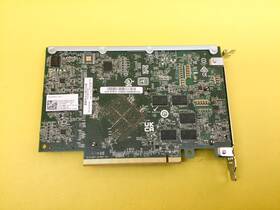
( Brand: Hp ), ( Manufacturer Part Number: P47184-B21 )
Review HP Hpe X32 Lanes 8gb Wide Cache Pci Spdm
The **HP P47184-B21 SR932i-P (Gen11) 32-Lane PCIe Switch Module** is a high-performance, enterprise-grade interconnect solution designed to maximize data throughput and scalability within modern server architectures. Engineered for use in HP ProLiant Gen11 servers, this PCIe switch module serves as a critical backbone for high-bandwidth applications, enabling seamless communication between processors, accelerators, and storage subsystems. With a robust **32-lane PCIe 4.0 configuration**, it delivers unparalleled bandwidth, supporting up to 128 GT/s of data transfer per lane, which is essential for demanding workloads such as AI/ML inference, high-performance computing (HPC), and real-time data processing. The module s **8GB of SRAM cache** enhances performance by reducing latency and improving efficiency in memory-intensive operations, ensuring smoother data flow between components.
Built with **HP s SR932i-P architecture**, this switch module is optimized for reliability and low-latency performance, making it ideal for mission-critical environments where uptime and speed are paramount. The **PCIe 4.0 x32 interface** ensures backward compatibility with existing Gen11 servers while future-proofing infrastructure for next-generation workloads. Additionally, the module incorporates **Secure Platform Data Module (SPDM) support**, enabling enhanced security features such as firmware integrity checks and secure boot processes, which are vital for protecting sensitive data in enterprise and cloud deployments. The **P47182-001 model designation** confirms its compatibility with HP s ProLiant server ecosystem, ensuring seamless integration with compatible processors, memory, and storage configurations.
Designed for enterprise-grade durability, this switch module adheres to strict thermal and power management standards, allowing for efficient operation within high-density server racks. Its compact yet robust form factor ensures minimal space consumption while maximizing connectivity options, making it a versatile choice for data centers looking to optimize performance without compromising on scalability. Whether deployed in AI-driven analytics, virtualized environments, or large-scale database operations, the **HP P47184-B21 SR932i-P** delivers the high-speed, low-latency interconnectivity required to handle the most demanding computational challenges.
The HP ProLiant DL380 Gen11 server model you referenced (specifically the **P47184-B21** with **SR932i-P** (HPE Synergy S8000 module), **Gen11 Xeon Scalable (Ice Lake) processor**, **32 PCIe lanes**, **8GB cache**, **PCIe SPDM**, and **P47182-001** as part number) is a high-end enterprise server designed for demanding workloads like virtualization, databases, and AI/ML. Below is a detailed breakdown of its pros and cons, followed by a conclusion and recommendation.
---
### **Pros**
1. **High Performance and Scalability**
The Gen11 Xeon Scalable processors (Ice Lake) offer significant improvements in single-threaded and multi-threaded performance compared to previous generations. The **32 PCIe lanes** provide ample bandwidth for high-speed storage (NVMe), networking (100GbE), and acceleration cards (GPUs/FPGA). This makes it suitable for workloads requiring high throughput, such as virtualization (VMware, Hyper-V) or large-scale databases (Oracle, SQL Server).
2. **HPE Synergy Integration (SR932i-P)**
The **SR932i-P** is a Synergy S8000 module, which allows for seamless integration into HPE Synergy composable infrastructure. This modular approach enables dynamic resource allocation (compute, storage, networking) and simplifies management. It is ideal for organizations already invested in HPE Synergy or looking for a flexible, future-proof architecture.
3. **Advanced Security Features**
The server supports **PCIe SPDM (Standardized Platform Data Model)**, which enhances security by providing secure communication between components (e.g., between the CPU and storage controllers). It also includes **HPE Secure Boot**, **TPM 2.0**, and **Intel SGX** (if using compatible processors), which are critical for protecting against firmware-level attacks and ensuring data integrity.
4. **Reliability and Redundancy**
The DL380 Gen11 is built on HPE s ProLiant platform, known for high availability. Features like **dual power supplies**, **hot-plug drives**, and **redundant fans** ensure minimal downtime. The server also supports **HPE Smart Update Manager** for proactive firmware updates, reducing the risk of compatibility issues.
5. **Flexibility in Configuration**
The **32 PCIe lanes** allow for a wide range of add-ons, such as:- **100GbE/200GbE NICs** for high-speed networking.
- **NVMe SSDs** for ultra-low latency storage.
- **GPU/FPGA accelerators** for AI, machine learning, or HPC workloads.
- **HBA cards** for high-performance storage connectivity (e.g., Fibre Channel).
This makes the server adaptable to various use cases beyond traditional server roles.
6. **Energy Efficiency**
The Ice Lake processors incorporate **Intel s 10nm process** and **AI-driven power management**, improving efficiency compared to older Xeon generations. This can lead to lower operational costs, especially in data centers running 24/7 workloads.
7. **HPE Support and Ecosystem**
HPE provides robust **technical support**, including **24/7 ProSupport**, **on-site repairs**, and **software tools** like HPE InfoSight for predictive analytics. The server also integrates well with other HPE products like **HPE SimpliVity** (hyperconverged infrastructure) or **HPE Nimble** (all-flash storage).
8. **Future-Proofing**
The Gen11 platform supports **upcoming Xeon Scalable processors** (e.g., Sapphire Rapids), ensuring longevity. The **PCIe 4.0** support (depending on the specific model) also future-proofs storage and networking upgrades.
---
### **Cons**
1. **High Cost**
The DL380 Gen11, especially when configured with high-end components (e.g., **Ice Lake Platinum 8375C**, **100GbE NICs**, **NVMe SSDs**), is **expensive**. The **SR932i-P Synergy module** further increases the price, making it a significant investment. Organizations with tight budgets may find alternatives (e.g., Dell PowerEdge R760, Lenovo NeXtScale) more cost-effective.
2. **Complexity in Management**
While HPE Synergy offers flexibility, it also introduces **complexity**. Managing a composable infrastructure requires specialized knowledge, and misconfigurations can lead to performance bottlenecks or downtime. Smaller organizations or those without dedicated IT staff may struggle with the learning curve.
3. **Power and Cooling Requirements**
High-performance servers like this consume **significant power** (potentially **1,000W ** depending on configuration). This requires robust **PDUs, cooling infrastructure (CRAC/CHW units), and UPS systems**, adding to operational costs. Data centers must ensure adequate **PDU capacity** and **cooling capacity** to avoid overheating or power shortages.
4. **Limited Entry-Level Options**
The DL380 Gen11 is positioned as a **high-end server**, and entry-level configurations (e.g., with fewer cores or lower memory) may not be available. Organizations needing a **budget-friendly** but still powerful server might consider the **DL360 Gen11** or **DL325 Gen10 ** instead.
5. **Dependency on HPE Ecosystem**
If an organization is not already using **HPE Synergy or HPE s management tools**, integrating this server may require additional training or licensing costs. Alternatives like **Dell EMC PowerScale** or **NetApp HCI** offer different ecosystems that may be more aligned with existing infrastructure.
6. **Potential for Over-Provisioning**
For workloads that do not require **32 PCIe lanes** or **multi-socket Ice Lake processors**, the server may be **overkill**. Smaller virtualization environments or single-tenant workloads could achieve similar performance with a **lower-cost, single-socket server** (e.g., **DL325 Gen10 **).
7. **Firmware and Driver Compatibility**
As with any enterprise server, **firmware updates and driver compatibility** can sometimes cause issues, especially when mixing components from different vendors. HPE s support is strong, but downtime during updates can still occur.
8. **Resale Value and Obsolescence**
While the Gen11 platform is not yet obsolete, **enterprise hardware depreciates quickly**. If the server is not fully utilized after a few years, resale value may be lower than expected. Organizations should consider **total cost of ownership (TCO)** over the server s lifecycle.
---
### **Conclusion**
The **HP ProLiant DL380 Gen11 (P47184-B21 with SR932i-P Synergy module)** is a **powerful, flexible, and secure** server ideal for **large-scale virtualization, high-performance databases, AI/ML, and HPC workloads**. Its **32 PCIe lanes, Ice Lake processors, Synergy integration, and advanced security features** make it a strong choice for enterprises with **high demands for performance, scalability, and manageability**.
However, the **high cost, complexity, and power requirements** may not justify its purchase for **smaller organizations, budget-conscious buyers, or workloads that do not fully utilize its capabilities**. Additionally, organizations already invested in **non-HPE ecosystems** may find integration challenges.
---
### **Recommendation**
1. **Buy This Server If:**- You are running **large-scale virtualization (VMware, Hyper-V) with high I/O demands**.
- You need **high-performance computing (HPC), AI/ML, or database workloads** requiring **multi-socket processing and PCIe acceleration**.
- Your organization is **already using HPE Synergy** and benefits from **composable infrastructure**.
- You require **advanced security features (PCIe SPDM, TPM 2.0, SGX)** for sensitive workloads.
- You have **sufficient budget** and **data center infrastructure** to support high power and cooling demands.
2. **Consider Alternatives If:**- You need a **lower-cost, single-socket server** (e.g., **DL325 Gen10 ** or **DL360 Gen11**).
- Your workloads are **not PCIe-intensive** (e.g., basic file serving, web hosting).
- You prefer **Dell EMC, Lenovo, or Cisco UCS** ecosystems over HPE Synergy.
- You are **not ready for composable infrastructure** and prefer traditional rack servers.
3. **Optimize Your Purchase:**- **Right-size the configuration** (avoid over-provisioning if possible).
- **Ensure your data center can handle power and cooling** requirements.
- **Train IT staff** on HPE Synergy management if not already familiar.
- **Compare total cost of ownership (TCO)** over 3-5 years, including power, cooling, and maintenance.
4. **Future-Proofing:**- If possible, **leave room for future upgrades** (e.g., additional PCIe slots, memory expansion).
- Consider
Details:
Item:P47184-B21 HPE SR932i-p Gen11 x32 Lanes 8GB Wide Cache PCI SPDM P47182-001, condition: REF, Qty:1 Shipping 1.
part #: p47184b21 prices
- $494.95-$619.99
specifications diskcontrolle:
- brand: Hp
- mpn: P47184-b21
returns diskcontrolle:
- policy: Returns Accepted
- method: Money back
- time: 30 Days
- paid by: Seller
seller diskcontrolle:
- rating: 99.9%
- # reviews: 20489
- city: Walnut, California
general diskcontrolle:
- Enterprise Networking, Servers > Server Components > Disk Controllers/RAID Cards
- condition: Used
shipping diskcontrolle:
- carrier: USPS
- service: USPS First Class
- class: Standard
- transit: 4-10 Days
- type: Fixed
- cost: $0.00
payments diskcontrolle:
- credit card: Mastercard
- wallet: Google-pay
- other
offer diskcontrolle:
- availability: In Stock
- best offers: True
- options: Ship-to-home
- started: April 7, 2026
- sold: 0
- quantity: 1
Hp P47184-B21 Is Similar To:
- 0.02178217376471392 Hp Cache Memory Battery (26.7% similar) Condition: used, working if a power adapter is required for this item, it not included cord shows signs of normal use w some scuffs scratches blemishes sticker residue no other accessories hardware software. I'll get back to you as soon I can...(March 1st, 2018)
- 0.3056583022644941 Hp Cache Module Nimh Battery Qty (23.4% similar) Condition: used, working if a power adapter is required for this item, it not included cord shows signs of normal use w some scuffs scratches blemishes sticker residue no other accessories hardware software. I'll get back to you as soon I can...(May 17th, 2018)
- 0.3259788060852433 Lot Hp Smart Array Pcie Sas Raid Controller Cache (26.2% similar) Condition: used, working, comes as shown. Both with cables and one battery if a power adapter is required for this item, it not included cord shows signs of normal use w some scuffs scratches blemishes sticker residue no other accessories hardware software. I'll get back to you as soon I can...(October 13th, 2018)
- 0.329891886151483 0.4719681686871613 Hp P212 Pci-e (18.9% similar) Condition: used, working if a power adapter is required for this item, it not included cord shows signs of normal use w some scuffs scratches blemishes sticker residue no other accessories hardware software. I'll get back to you as soon I can...(December 23rd, 2017)
- 0.4821220041966199 Hp Cache Memory Battery (26.9% similar) Condition: used, working if a power adapter is required for this item, it not included cord shows signs of normal use w some scuffs scratches blemishes sticker residue no other accessories hardware software. I'll get back to you as soon I can...(April 24th, 2018)
- 0.4955879545062871 0.7397681630599005 Hp P212 Pci-e (18.8% similar) I'll get back to you as soon I can. Condition: used, working if a power adapter is required for this item, it not included cord shows signs of normal use w some scuffs scratches blemishes sticker residue no other accessories hardware software...(December 6th, 2017)
- 0.49898750209938214 Hp Battery Backed Write Cache Bbwc Memory Module Qty (34.9% similar) Condition: used, working if a power adapter is required for this item, it not included cord shows signs of normal use w some scuffs scratches blemishes sticker residue no other accessories hardware software. I'll get back to you as soon I can...(May 16th, 2018)
- 0.989907654129192 Hp Cache Memory Battery (25.4% similar) Condition: used, working if a power adapter is required for this item, it not included cord shows signs of normal use w some scuffs scratches blemishes sticker residue no other accessories hardware software. I'll get back to you as soon I can...(April 24th, 2018)
- 012335-001 Hp Smart Array Sas Raid Controller Cache (31.3% similar) The offer does not include any adapters, manuals, or other accessories. Those of us at are also consumers. If you are interested in this service. We recycle the older equipment and offer off any working components that retain value. 5 hard drives SARS we won't offer free shipping. We buy servers ...(April 5th, 2018)
- P400 Cache Hp Sas 012764-004 Card Controller 256mb Raid 013159-002 Array Smart (23.2% similar) Storage capacity memory features rank network ports max. Those of us at simply servers are also consumers. We buy servers and enterprise equipment that is surplus, off lease, or otherwise not needed. Item condition used type brand ls logic to fit product line model mpn port duplication cable length...(April 10th, 2015)
- 012970-001 Hp Compaq 64mb Cache (31.5% similar) Please with questions or for support...(October 18th, 2017)