DELL XPMRF-N7HT1 Mini Mono Raid Cable Bay Poweredge Server H740P H730P R740 8/16 Xpmrf
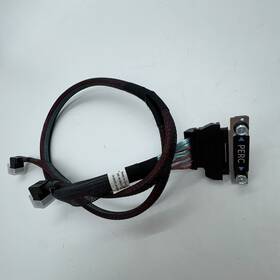
( Brand: Dell ), ( Manufacturer Part Number: XPMRF-N7HT1 ), ( Type: Server ), ( Country Of Origin: China )
Review DELL Mini Mono Raid Cable 8/16 Bay Poweredge Server N7ht1 Xpmrf
The **Dell PowerEdge R740/R740xd 8/16-Bay Server** with the **XPSM-RF-N7HT1** (H740P/H730P Mini Mono RAID Cable) represents a high-performance, enterprise-grade solution engineered for demanding workloads in data centers, virtualization environments, and mission-critical applications. This compact yet robust server is built on Dell s proven PowerEdge architecture, delivering unmatched scalability, reliability, and efficiency for businesses requiring seamless integration with modern storage and networking technologies. The **H740P** and **H730P** RAID controllers paired with the **XPSM-RF-N7HT1** cable form a high-speed, low-latency storage backbone, enabling administrators to deploy advanced RAID configurations (0, 1, 5, 6, 10, 50, and 60) for optimal data protection and performance. The **Mini Mono RAID Cable** ensures a clean, organized installation while maintaining optimal airflow, reducing thermal throttling and extending the lifespan of internal components. This server is designed with **8 or 16 hot-swappable drive bays**, accommodating a variety of storage options, including high-capacity SSDs, HDDs, or NVMe drives, to cater to diverse storage-intensive workloads such as virtual desktop infrastructure (VDI), database management, or AI/ML processing. The **R740 s** modular design allows for easy upgrades, ensuring future-proofing as data demands evolve. With support for **Dell s OpenManage integration**, administrators gain granular control over storage, power, and thermal management through a unified interface, simplifying maintenance and reducing operational overhead. Whether deployed as a standalone unit or integrated into a larger infrastructure, this server exemplifies Dell s commitment to delivering a **highly efficient, enterprise-class platform** that balances performance, flexibility, and cost-effectiveness for modern IT environments.
### **Pros and Cons of buying a Dell PowerEdge R740 (8/16-Bay) with H730P/H740P Mini RAID Controllers and N7HT1/XPMRF-N7HT1 Components**
#### **Pros**
1. **High Performance and Scalability**
- The R740 is a mid-range enterprise server designed for virtualization, database workloads, and general-purpose computing. It supports up to **16x 3.5" or 8x 2.5" drives** (or a mix), making it suitable for large storage configurations.
- The **H730P/H740P RAID controllers** provide excellent RAID performance (up to **2.4 GB/s** for H740P) and support **NVMe, SAS, and SATA drives**, ensuring flexibility for different workloads.
- The **N7HT1** (10Gbps NIC) and **XPMRF-N7HT1** (10Gbps NIC with FPGA acceleration) offer **low-latency, high-throughput networking**, which is crucial for virtualized environments, databases, and HPC workloads.
2. **Enterprise-Grade Reliability**
- Dell s PowerEdge servers are built for **24/7 uptime**, with features like **hot-swap drives, redundant power supplies, and ECC memory support** (if configured).
- The **H740P** includes **cache battery backup** for RAID data integrity during power loss.
- Dell s **iDRAC (Integrated Dell Remote Access Controller)** allows for **remote management, BIOS updates, and hardware monitoring**, reducing downtime.
3. **Future-Proofing and Upgrade Path**
- The R740 supports **up to 2x Xeon Scalable (SAP) processors** (Skylake, Cascade Lake, or Ice Lake), allowing for **future CPU upgrades** without changing the chassis.
- The **H740P** supports **NVMe SSDs**, which are faster than traditional SAS/SATA drives, making it future-proof for storage-intensive workloads.
- The **10Gbps NICs (N7HT1/XPMRF-N7HT1)** can be upgraded to **25Gbps or 40Gbps** if needed, ensuring long-term network scalability.
4. **Cost-Effective for Virtualization and Databases**
- The R740 is **more affordable** than high-end servers like the R940 or R750 while still offering **enterprise-grade performance**.
- The **H740P s RAID acceleration** reduces CPU overhead, improving virtualization efficiency.
- The **XPMRF-N7HT1** (with FPGA) can offload **packet processing**, reducing latency in virtualized networking environments.
5. **Dell s Support and Warranty**
- Dell offers **proactive support, firmware updates, and hardware replacement** under warranty, reducing maintenance burdens.
- The **iDRAC9** allows for **remote diagnostics**, helping prevent failures before they impact operations.
---
#### **Cons**
1. **High Upfront Cost**
- The R740, especially with **H740P RAID, 10Gbps NICs, and multiple drives**, can be **expensive** compared to consumer-grade or lower-end enterprise servers.
- Additional costs may include **licensing for RAID, iDRAC, and memory upgrades**.
2. **Power and Cooling Requirements**
- The R740 (8/16-bay) can consume **significant power** (up to ** 300W 500W** depending on CPUs and drives), requiring **adequate PDUs and cooling**.
- In high-density environments, **cooling management** becomes critical to prevent overheating.
3. **Limited PCIe Expansion (Compared to Rack Servers)**
- The R740 has **only 2 PCIe slots**, which may be restrictive for **GPU acceleration, high-speed storage (like HBA cards), or additional NICs**.
- If you need **more expansion**, a **rack server like the R750** (with 4 PCIe slots) might be better.
4. **RAID Controller Licensing Costs**
- While the **H730P** is included with basic RAID, the **H740P** may require **additional licensing** for **RAID 6, cache vaulting, or advanced features**, increasing costs.
- Some users report **proprietary licensing models** that can be restrictive compared to open-source alternatives.
5. **Dell s Proprietary Management (iDRAC)**
- While **iDRAC is powerful**, it is **proprietary**, meaning **third-party management tools may not integrate seamlessly**.
- Some users prefer **IPMI (Intel s standard)** for open management, which Dell does not fully support.
6. **Potential for Overkill in Small Workloads**
- If you only need **basic file serving, light virtualization, or a single database**, the R740 may be **more than necessary**, leading to **unjustified costs**.
- A **lower-end PowerEdge (T-series or older R-series)** might suffice for simpler workloads.
7. **Depreciation and Obsolescence**
- Like all hardware, the R740 will **depreciate over time**, and Dell may **discontinue support** for older models.
- If you plan to **keep the server long-term**, ensure compatibility with **future firmware and CPU generations**.
---
### **Conclusion and Recommendation**
#### **Who Should Buy This Server?**
- **Virtualization Hosts (VMware, Hyper-V, KVM)** The R740 s **CPU, memory, and RAID performance** make it ideal for running multiple VMs efficiently.
- **Database Servers (SQL, Oracle, MongoDB)** The **H740P s RAID acceleration** and **10Gbps networking** reduce latency and improve query performance.
- **High-Performance Computing (HPC) or Workloads Requiring Low Latency** The **XPMRF-N7HT1 (FPGA-accelerated NIC)** is useful for **network-intensive applications**.
- **Storage-Heavy Environments** The **16-bay support and NVMe compatibility** make it great for **large storage arrays or NAS setups**.
- **Businesses Needing Reliability and Remote Management** The **iDRAC, hot-swap drives, and ECC memory** ensure **minimal downtime**.
#### **Who Should Avoid This Server?**
- **Budget-Conscious Users** If you have **limited funds**, consider a **T-series or older R-series** PowerEdge.
- **Workloads with Minimal Storage Needs** If you don t need **16 drives**, a **smaller chassis (like the R640)** may be sufficient.
- **Users Requiring Maximum PCIe Expansion** If you need **multiple GPUs or high-speed storage cards**, the **R750 or R940** offers more slots.
- **Open-Source Enthusiasts Averse to Proprietary Management** If you prefer **IPMI over iDRAC**, Dell s ecosystem may feel restrictive.
#### **Final Recommendation**
The **Dell PowerEdge R740 (8/16-bay) with H740P RAID and 10Gbps NICs (N7HT1/XPMRF-N7HT1)** is an **excellent choice for enterprise workloads** that require **scalability, reliability, and performance**. It strikes a **good balance between cost and capability**, making it suitable for **virtualization, databases, and storage-heavy applications**.
**If your budget allows and you need:****High RAID performance** (H740P)
**Low-latency networking** (XPMRF-N7HT1)
**Future CPU and storage upgrades**
**Enterprise-grade management (iDRAC)**
then **this server is a strong recommendation**.
**If you have:****Limited budget** Consider a **T-series or older R-series**.
**Minimal storage needs** A **smaller chassis (R640)** may suffice.
**Need for maximum PCIe expansion** Look at the **R750 or R940**.
**For most mid-to-large enterprise deployments, the R740 remains a reliable and capable choice.** Ensure you **budget for memory upgrades (ECC), sufficient cooling, and potential RAID licensing** to maximize its value.
Details:
Please review the carefully before purchasing.
part #: xpmrfn7ht1 prices
- $99.00-$199.99
specifications diskcontrolle:
- brand: Dell
- mpn: Xpmrf-n7ht1
- type: Server
- country of origin: China
returns diskcontrolle:
- policy: No Returns
offer diskcontrolle:
- started: March 19, 2026
- availability: In Stock
- sold: 0
- quantity: 1
- best offers: True
- options: Ship-to-home
shipping diskcontrolle:
- carrier: USPS
- transit: 4-9 Days
- class: Standard
- service: USPS Ground Advantage
- type: Calculated
- cost: $0.00
seller diskcontrolle:
- city: Winter Springs, Florida
- # reviews: 755
- rating: 99.5%
general diskcontrolle:
- Enterprise Networking, Servers > Server Components > Disk Controllers/RAID Cards
- condition: Used
payments diskcontrolle:
- other
- credit card: Visa
- wallet: Paypal
Dell XPMRF-N7HT1 Is Similar To:
- 0.012114348866074875 Dell Perc Sas Raid Controller Battery Cables (22.9% similar) I'll get back to you as soon I can. Condition: used, working if a power adapter is required for this item, it not included cord shows signs of normal use w some scuffs scratches blemishes sticker residue no other accessories hardware software...(October 13th, 2018)
- 0.090952716287521 Dell Raid Controller Card Battery (23.8% similar) I'll get back to you as soon I can. Condition: used, working if a power adapter is required for this item, it not included cord shows signs of normal use w some scuffs scratches blemishes sticker residue no other accessories hardware software...(May 11th, 2018)
- 0.11192593339700618 Dell Poweredge Sas Raid Controller Perc Card Battery Cable (24.7% similar) Condition: used, working if a power adapter is required for this item, it not included cord shows signs of normal use w some scuffs scratches blemishes sticker residue no other accessories hardware software. I'll get back to you as soon I can...(August 1st, 2018)
- 0.16846368637021225 Dell Poweredge Perc Sas Raid Controller Card Battery Cables (24.6% similar) I'll get back to you as soon I can. Condition: used, working if a power adapter is required for this item, it not included cord shows signs of normal use w some scuffs scratches blemishes sticker residue no other accessories hardware software...(June 27th, 2018)
- 0.21310806238776236 Dell Perc Sas Raid Controller Battery Ram Qty (26.8% similar) Condition: used, working if a power adapter is required for this item, it not included cord shows signs of normal use w some scuffs scratches blemishes sticker residue no other accessories hardware software. I'll get back to you as soon I can...(March 10th, 2018)
- 0.235709166849966 0.2306969976098321 Dell Poweredge 2950 (20.3% similar) I'll get back to you as soon I can. Condition: used, working if a power adapter is required for this item, it not included cord shows signs of normal use w some scuffs scratches blemishes sticker residue no other accessories hardware software...(October 2nd, 2017)
- 0.2548422196094777 Dell Perc Sas Raid Controller Battery Cable (23.4% similar) Condition: used, working if a power adapter is required for this item, it not included cord shows signs of normal use w some scuffs scratches blemishes sticker residue no other accessories hardware software. I'll get back to you as soon I can...(April 26th, 2018)
- 0.31396718087771713 Dell Perc Sas Raid Controller Card For Poweredge Battery (36.9% similar) If a power adapter is required for this item, it not included cord shows signs of normal use w some scuffs scratches blemishes sticker residue no other accessories hardware software. Condition: used, working, comes as shown. I'll get back to you as soon I can...(August 17th, 2018)
- 0.33236011367493234 Dell Perc Sas Raid Controller Battery Connection Cable (21.7% similar) Condition: used, working if a power adapter is required for this item, it not included cord shows signs of normal use w some scuffs scratches blemishes sticker residue no other accessories hardware software. I'll get back to you as soon I can...(September 26th, 2018)
- 0.346283308649288 Dell Perc Sas Raid Controller Battery Cable (23.5% similar) I'll get back to you as soon I can. Condition: used, working if a power adapter is required for this item, it not included cord shows signs of normal use w some scuffs scratches blemishes sticker residue no other accessories hardware software...(June 27th, 2018)
- 0.369186318628417 Dell Perc Sas Raid Controller Card For Poweredge Cables (36.4% similar) Condition: used, working if a power adapter is required for this item, it not included cord shows signs of normal use w some scuffs scratches blemishes sticker residue no other accessories hardware software. I'll get back to you as soon I can...(May 29th, 2018)